Foreword
Foresight work often deals in abstractions, megatrends, scenarios and systems. But at its core, it is about people and lived realities. Women’s health is one of the clearest examples of where the distance between what the system facilitates and what individuals experience has been too wide for too long.
Closing that gap is not only a technical or institutional task. It is a matter of alignment between knowledge and practice, between systems and citizens, between intention and outcome.
This Playbook does not claim to solve the whole challenge. But it does something essential – it makes the path visible and actionable, and it shifts the conversation from what we know should change to what it takes to generate the change we want. That, in itself, is a powerful step forward.
From a foresight perspective, this marks a critical transition. We move from diagnosis to design, from isolated initiatives to system architecture, from aspiration to infrastructure.
The strength of this work lies in its refusal to treat women’s health as a niche or sectoral issue. Instead, it positions it as the foundational infrastructure for societies, economies, and institutions. This reframing matters. Because infrastructure is not optional. It is not cyclical. It is not dependent on short-term attention or on a single stakeholder. It is something we build deliberately, maintain consistently, and rely on collectively.
What emerges from the Nordic Women’s Health 2040 initiative is not a blueprint in the traditional sense. It is something more robust: a shared language for coordination across a complex system.
This is where foresight adds value. Not by introducing entirely new ideas, but by vividly painting the possible, and by creating coherence across efforts that would otherwise remain fragmented. Challenges such as the fourteen-year lag between research and clinical practice are not just a healthcare issue, they are systemic inefficiencies with economic, social, and human consequences.
This Playbook implicitly addresses that challenge and many others. By emphasising coordination, shared standards, and Nordic-scale infrastructure, it offers a pathway to move from fragmented national strengths to a more coherent regional system, harvesting clear synergies in the North. In a world of increasing fragmentation, that is not just efficient, it is a step to future proofing the region. We invite you to read it as we did, not as a prescription, but as a shared lens on what the Nordic system is already doing, and what it could choose to do next.
On behalf of the Copenhagen Institute for Futures Studies, it is a privilege to support and contribute to this work. The real impact, however, will come from those who recognise their role within it and act.
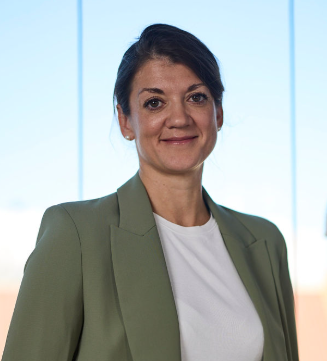
Daria KrivonosCEO, Copenhagen Institute for Futures Studies
Endorsement
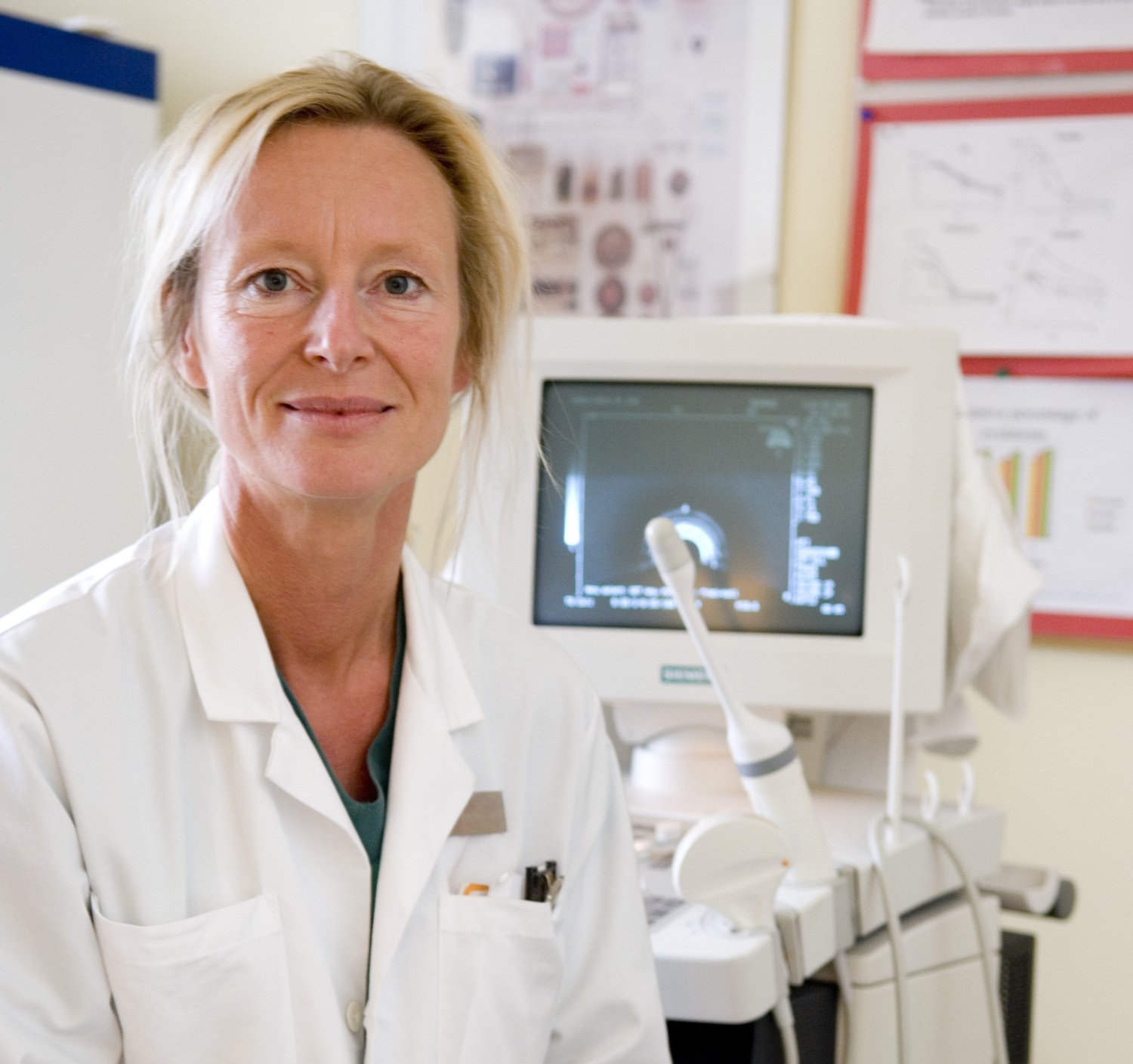
Kristina Gemzell DanielssonProfessor, Karolinska Institutet
This Playbook marks an important shift in how we understand progress in women’s health – from isolated initiatives to system-level transformation. By articulating the infrastructure required across research, care, innovation, and society, it complements existing national strategies, including the UK Women’s Health Strategy, while going a step further in defining how change actually happens. Its strength lies in offering a shared architecture rather than a prescriptive agenda. This makes it a powerful tool not only for the Nordic region, but for the global women’s health community.
How to Read This Playbook
Women’s Health 2040 (WH2040) operates as a four-layer architecture working in parallel:
- The Charter (Layer 1), published in The Lancet in January 2026, tells the Nordic system what 2040 requires.
- This Playbook (Layer 2) tells the system what infrastructure is needed to get there.
- The Nordic Intelligence Brief (Layer 3), live weekly since early 2026, tells the system what is happening now.
- The Accelerator Loop (Layer 4) is the design principle through which the system detects whether knowledge is moving from production through translation to adoption.
This Playbook helps establish whether the four layers reinforce one another in practice. It organises Nordic women’s health around twenty-eight named ‘needs’ positioned within a 3×4+1 framework – three operational domains (Research, Innovation, Care), four enabling pillars (People, Money, Policy, Data), and one Foundation (Awareness). Each named need carries a code that doubles as a navigation key. The framework, the layers, and the Charter-Playbook relationship are explained in Part I §1 and §2.
The activity codes are simple to read. The first letter is the domain (R for Research, I for Innovation, C for Care, A for Awareness Foundation). The second letter is the pillar (P for People, M for Money, Po for Policy, D for Data). The number is the activity within the intersection. If you are a researcher, look for the Rs. If you are a policymaker, look for the Po needs across all four domains. Of the twenty-eight named needs, eleven sit in Research, eight in Care, five in Innovation, and four in the Awareness Foundation.
No reader needs to absorb the whole Playbook. The coding system makes selective adoption navigable; Part III §4 carries reader-type entry points by role.
Reader’s guide – The 3×4+1 framework: domains × pillars, with the Awareness Foundation
| DOMAIN | People | Money | Policy | Data |
|---|---|---|---|---|
| Research | Researchers trained in women’s health methodologyR-P-# | Catalytic Fund + Priority FrameworkR-M-# | Priority Framework (sex-stratified mandates)R-PO-# | Infrastructure & Standards (dictionary, cohorts, FAIR)R-D-# |
| Care | Education Ecosystem (HCP + public training)C-P-# | QoL Framework (value-based reimbursement)C-M-# | Clinical Guidelines (gender-sensitive care)C-PO-# | QoL Framework (PROMs collection)C-D-# |
| Innovation | Data Ambassadors (embed requirements in initiatives)I-P-# | Investment Guidelines (50% allocation)I-M-# | Regulatory Sandbox (adaptive regulation)I-PO-# | Intelligence Layer (AI infrastructure)I-D-# |
Foundation = Awareness · A-#
The webapp at womenshealth2040.org is the live addition to this printed Playbook. Each domain chapter closes with a short URL – for example womenshealth2040.org/research that points to the current-state synthesis behind that chapter, refreshed weekly through the Nordic Intelligence Brief. The printed Playbook is the timeless architecture; the webapp carries the institutional density that updates as Nordic systems evolve. A glossary of abbreviations follows the appendices.
Part I
Introduction
1. This Playbook And the Charter
The Nordic Charter for Women’s Health 2040 was published in January 2026 in The Lancet, developed through participatory strategic foresight with 136+ contributors across five Nordic countries. It establishes why women’s health matters as a critical Nordic infrastructure, what a desired 2040 Nordic women’s health landscape looks like, and the engagement pathways through which institutions can contribute. The Charter is a public good – open, citable, and available for any institution to reference, build on, or adopt without permission. In line with the Charter, women’s health is read broadly throughout this Playbook as the full set of conditions, life-stage transitions, and determinants that affect women’s bodies and lives, including conditions women experience differently from, or disproportionately relative to, men, not only reproductive health.
This Implementation Playbook is the Charter’s operational companion. The Charter answers “what” and “why”; the Playbook answers “how”, “by whom”, and “is it working”. It provides the operational details the Charter did not cover – sequencing, interdependencies, institutional entry points, and a way to assess whether knowledge is actually leading to practice. Twenty-eight coded activities, mapped across the Charter framework, are each anchored with existing Nordic and European initiatives and assessed through a single cross-domain lens, introduced in this playbook.
A reader looking for the framework architecture, the economic case, or the engagement pathways should consult the Charter directly. A reader looking for a specific activity to adopt, a coordination opportunity to pursue, or an assessment framework to apply, should find it here.
The Playbook is designed for selective use. Each reader finds their own work already named. A research council progressing on a specific activity finds it reflected in the Research chapter. A regional health authority piloting a reimbursement model finds the Care need that describes what the pilot is already testing. A patient organisation delivering public literacy work finds the Awareness need that validates the work it is carrying. The coding system makes selective adoption navigable. The Accelerator Loop reveals where coordination between activities adds value. Evidence and institutional anchors repeat across chapters where they ground multiple named needs, so each chapter can be read in isolation. Each chapter, named need, and coordination point is designed to function independently.
2. The Framework And Its Convergence
The Charter’s framework is 3×4+1. Three operational domains – Research, Care, and Innovation – map the pathway through which knowledge becomes practice. Four enabling pillars – People, Money, Policy, and Data – describe the infrastructure required for their operation. One Foundation Layer – Awareness – describes the cultural legitimacy that determines whether the operational domains succeed or stall. Every activity in this Playbook sits in one of these intersections: it belongs to a domain (or, in the case of Awareness, cuts across all of them), it addresses one of the four pillars, and it does its work in the context of the Foundation that the Awareness activities build.
The four pillars were originally framed by a foresight process engaging a Governance expert group, whose work crystallised the established infrastructure. But the pillars are authoritative in this Playbook not because the Governance group named them first. They are authoritative because every other expert group, working from different starting points across the domains, during the 2025 process, arrived at the same four categories. The Research group explored the question of what would make women’s health research function at a Nordic scale by 2040, and identified People, Money, Policy, and Data. The Care group asked what would make gender-sensitive care the default, identified the exact same. And so did the Innovation group, the Literacy and Awareness group, and the Governance group, all of which returned the same four infrastructure needs. That convergence is the Charter’s strongest methodological claim: the pillars reflect a genuine system property, not a chosen organising device. People, Money, Policy, and Data are what every domain turned out to need, whether the group started from biomedical research, clinical pathways, industrial innovation, cultural literacy, or institutional coordination.
The Playbook does not replicate the framework reasoning. It operationalises it. What the codes name and how they are read is given in the Reader’s Guide; what each named need is, what is happening in the Nordics already, and what could move it forward sits in the four domain chapters that follow. Whether knowledge is actually moving from production through translation to adoption is the assessment question the Loop aims to cover.
Table 1 – Aggregate Nordic Density Map across the four domains
| DOMAIN | Denmark | Finland | Iceland | Norway | Sweden |
|---|---|---|---|---|---|
| Research |  KISO + Aarhus 300k cohorts; Hvidovre/DTU on Gefion KISO + Aarhus 300k cohorts; Hvidovre/DTU on Gefion | FinnGen R14 – 519k endpoints (Feb 2026) |  deCODE genetics (no WH pipeline) deCODE genetics (no WH pipeline) | MoBa, HUNT, Helsedata; Driv (UiB Bergen) |  Three Forte centres (WHOLE / MAMA / CIRCE) – SEK 210M (EUR 19.4M), Nov 2025 Three Forte centres (WHOLE / MAMA / CIRCE) – SEK 210M (EUR 19.4M), Nov 2025 |
| Innovation | BioInnovation Institute (Venture Lab + Bio Studio) | LUMI / VALO2 / Findata expanded (Jan 2026) | KLAK startup hub (no WH instrument) | Datatilsynet AI sandbox – operational since 2021 | Karolinska AI ecosystem; Innovestor Life Science→Gesynta SEK 304M (EUR 28.1M) |
| Care | Sundhedsstyrelsen hysterectomy guideline (28 Nov 2025); AmbuFlex | Duodecim Current Care: menopause (Sep 25), UI in women (Mar 26) | Landspítali endometriosis team | NKTEA (Oslo UH) – only Nordic-anchored national women’s-health competence service | Socialstyrelsen national menopause framework (comment Oct 25, final Apr 26) |
| Awareness | Endometrioseforeningen (deepest civil-society legitimacy); Sundhed.dk | Terveyskylä – 400+ digital care pathways | Heilsuvera; National Curriculum Guide | Helsenorge.no – most consolidated Nordic health portal | Lgr22; 1177 Vårdguiden; menopause-at-work guidance (Oct 25) |
Density key: Thick Medium Thin Absent
Density key: The density assessment is qualitative, drawing on the foresight evidence base and 2026 institutional state. Thick indicates a named institutional anchor with active programme, dedicated funding, and policy mandate. Medium indicates partial coverage – funding without policy, programme without funder, or institutional commitment without operational scale. Thin indicates a single signal or pre-operational status.
Sweden anchors thick national infrastructure across Research, Innovation, and Care; the Awareness layer is medium across the region. Norway carries two anchored institutional firsts – NKTEA at Oslo University Hospital, the only nationally-mandated national competence service for endometriosis and adenomyosis in the region, and Datatilsynet, the longest continuously operational Nordic AI regulatory sandbox (in service since 2021); Denmark’s joint Datatilsynet–Digitaliseringsstyrelsen sandbox reopened for applications on 30 March 2026. Denmark anchors cohort innovation, incubation depth, and civil-society legitimacy through Endometrioseforeningen. Finland leads on compute and EHDS coordination through LUMI, VALO2, and Findata. Iceland punches above its weight on genetic discovery through deCODE and below on every other infrastructure layer. The Pan-Nordic column sits thin across all four domains – the system’s single most consistent coordination gap, and the architectural opportunity the rest of this Playbook reads against.
3. We, the People
This Playbook is held as an open commons. It is not for sale. The Playbook has been developed within the Women’s Health 2040 frame so that the architecture, the language, and the institutional positioning belong to the Nordic women’s health community rather than to any one organisation. Anyone may cite it, draw on it, position their own work inside it, or build on it without permission.
The work was built by people who showed up. During 2025, 136 contributors across Denmark, Finland, Iceland, Norway, and Sweden devoted their time to the participatory foresight process that produced the Charter. Five expert groups – Research, Care, Innovation, Governance, and Literacy and Awareness – worked independently of one another and arrived at the same four-pillar architecture. The Charter co-leads, the Charter co-authors of the January 2026 publication in The Lancet, the Copenhagen Institute for Futures Studies as foresight partner, the Nordic Women’s Health Hub as the ecosystem anchor, and the ambassadors carrying the work into 2026 across institutions, parliaments, hospitals, and patient organisations are anchors of this work, who keep it moving, and who will carry it forward through the years between this publication and 2040.
The 136 who joined forces in the 2025 activities were the leads. Behind them stands a much larger group – the scientists, doctors, medical professionals and innovators across the Nordic region who have been advancing women’s health for decades, often alone, often against the institutional inertia shaping research priorities and clinical guidelines. The endometriosis specialist arguing for clinical diagnostic pathways before the evidence was indexable. The cardiologist collecting sex-differentiated case data no one was asking for. The midwife teaching menopause where no curriculum existed. The patient-organisation volunteers carrying public conversation when no national authority would. None of this work has been easy, and most of it has been carried out at a personal cost. Nordic women’s health is their work first and foremost. The Charter recognises what they have built and lifts it into a shared regional architecture, so that decades of dedicated practice becomes easier to defend, easier to share across borders, and easier to build on.
The Nordic region is home to twenty-seven million people. It carries one of the world’s highest levels of digital literacy, a collaborative working culture, world-class healthcare, and trusted public institutions. The Charter and the Playbook do not propose installing a new system on top of the existing. The premise is the opposite. The infrastructure for Nordic women’s health by 2040 is largely already here, distributed across five sovereign systems, doing real work. What has been missing is the shared interpretive lens that lets the work read as one architecture, the coordinating language that lets institutions across the region mirror their work in one another’s, and the assessment logic that lets the system know whether knowledge is actually reaching the women in their everyday lives.
Women’s health is not a niche or minority interest. It is foundational infrastructure for the population’s health, for workforce participation, and for the economic resilience of Nordic societies. Building it is an investment in society as a whole. The Playbook does not reinvent the wheel; it sheds a light on those already turning and allows them to move in coordination. Where it proposes new work, the proposal is to build on what is already here, to learn from what has been done elsewhere, to share what works between countries, and to multiply Nordic strengths. Anyone reading this is invited to do exactly that. The work continues either way; pursuing it together is what makes it sustainable through the time horizon the Charter extends towards.
4. The Accelerator Loop
Women’s health suffers from a fourteen-year average lag between research publication and routine clinical practice. This is not primarily a knowledge problem – the science exists and is available. It is a translation problem: knowledge gets produced but not translated, translated but not adopted, adopted but not sustained. The gap between what Nordic women’s health research knows and what Nordic women actually experience in healthcare is the defining challenge this Playbook addresses, and the metric against which Nordic progress on women’s health through 2040 should ultimately be assessed.
The Accelerator Loop is the Playbook’s central assessment lens, and its most distinctive conceptual contribution beyond the Charter. It describes a directional sequence. Research produces knowledge. Innovation translates that knowledge into tools, standards, and solutions. Care adopts those translations into clinical practice. Awareness enables each stage by creating a public demand, institutional trust, and the cultural literacy that make production, translation, and adoption possible. For any topic area – endometriosis, female cardiovascular disease, menopause management, pelvic floor disorders – the Loop generates three diagnostic questions. Is relevant research being produced? Is it being translated into usable tools, standards, or guidelines? Is care actually adopting those translations? Progress is measured by whether the handoffs between stages are taking place, not by whether any single activity hits a calendar milestone.
The Loop’s distinctive character is twofold. First, it treats the Research ▸ Innovation ▸ Care pathway as a system whose forward motion depends on Awareness as the cultural transmission layer. It pulls all three domains forward and ensures that feedback flows from care outcomes back through public understanding into the next research cycle. Second, it treats Awareness as a distinct system function with its own activities, metrics, and institutional entry points – not as a communications workstream attached to other domains. For women’s health in particular, where public demand, cultural literacy, and patient advocacy are frequently the missing enabling conditions, this is not a stylistic choice. It is a description of a system property that makes the other three loops functional.
5. Awareness as Foundation Layer
Most health charters treat public awareness as communication – a channel that disseminates content the other domains produce. The Nordic Charter treats it differently, for reasons that emerged from the participatory foresight process itself. The Literacy and Awareness expert group, working through 2025, identified that its mission was not aligned with Research, Care, and Innovation at the same level of the system. Awareness, the group concluded, was the cultural legitimacy that determines whether People capacity is built, whether Money flows consistently over electoral cycles, whether Policy gains public support through cultural change, and whether Data systems earn the public trust required for women to share intimate health data across decades and generations. That insight is the architectural basis for the “+1” in the 3×4+1 framework.
The Awareness chapter therefore looks different from the three operational domain chapters. Rather than pillar-coded activities sitting within a domain, it carries four cross-cutting activities – a Nordic Women’s Health Literacy Standard (A-1), a Life-course Education Pipeline (A-2), Corporate Health Literacy Reporting (A-3), and Nordic Women’s Health Evidence Commons (A-4) – each of which enables all the pillars across every operational domain. The enabling logic is short and concrete. Sustained engagement between validated knowledge, credible professional practice, and genuine public participation is what trust emerges from – trust is the output of that engagement, not the precondition for it. Where engagement is sustained, participation deepens and embeds, and the cycle becomes self-reinforcing. Without this foundation, technically perfect infrastructure remains practically empty. A federated health-data cohort with no public trust does not recruit participants. A clinical guideline with no public understanding of why it matters does not survive a change of government. A venture facility for women’s health innovation with no constituency pressure does not defend its budget when political priorities shift. The Awareness Foundation is what keeps the other domains functional and effective.
The structural relationship between Awareness and the rest of the architecture is one of foundation to the operational system. The four Awareness needs (A-1 through A-4) form the foundation: cultural literacy, life-course education, workplace recognition, and the public evidence base. The four pillars rise from that foundation. People capacity depends on cultural literacy creating demand for women’s health expertise. Capital mobilisation depends on workplace recognition, framing women’s health as economic infrastructure. Policy legitimacy depends on public literacy, creating constituency pressure. Data trust depends on the validated evidence-based earning participation. The pillars, in turn, carry Research, Innovation, and Care as the operational system above them. The Loop describes how knowledge moves through that system. The Foundation describes what the system rests on. This is the architectural meaning of the +1 in the 3×4+1 framework.
6. A Note on Method and Tools
This Playbook was produced applying two distinct methods working together: the participatory strategic foresight that produced the Charter, and the structured evidence synthesis that produced the activity chapters.
The Playbook’s evidence synthesis method is separate from the Charter. Each activity chapter was compiled through structured literature review, targeted searches against published Nordic and European sources, and AI-assisted research and synthesis using multiple large language models in parallel – Perplexity for search-grounded responses, and ChatGPT, Claude, and Gemini for structured synthesis and drafting. The triangulation protocol required that no claim appears in the Playbook without verification against at least two independent AI syntheses or primary sources. Named institutions were cross-checked against their own published material. Dates and figures were traced to original sources. Gaps in the evidence base were named as gaps rather than silently filled. AI systems served as research accelerators and drafting aids; the final voice, political judgement, domain vision, and institutional positioning are human-authored, and the Charter’s founding architect and the Copenhagen Institute for Futures Studies team held final editorial responsibility throughout. The distinction the Playbook draws is between human-led synthesis with AI as the research accelerator and AI-generated content under cursory human review. This Playbook is the former.
The Playbook inherits the limits of a 2026 state of the world – it reflects what the best available evidence said at the time of writing, and some Nordic-language primary sources may be under-represented in AI-surfaced results. It is designed for regular updates rather than as a static single-point authority. The Nordic Intelligence Brief is the primary channel through which this Playbook’s evidence base will continue to be tracked beyond the date of publication. The full methodology note – triangulation protocol, verification standards, tool-by-tool attribution, and the governance arrangement through which the Charter and Playbook together are maintained as open commons – is published alongside the Playbook at womenshealth2040.org.
Part II
How to Read the Chapters
How to Read the Chapters
The four chapters that follow share one architecture. Each one has the same five-step pattern: a 2040 future statement set in present tense, a current-state reading of the Nordic landscape with a country-by-country density map, a four-pillar architectural reading of that landscape, the named needs that follow from it, and a closing position in the Accelerator Loop. Reading the same architecture across Research, Innovation, Care, and the Awareness Foundation is the experience of seeing that convergence as tangible and in operational form.
The named needs are entry points, not instructions. There are twenty-eight of them – eleven in Research, five in Innovation, eight in Care, and four cross-cutting Foundation needs that operate concurrently across all three operational domains. None propose a new body, a new mandate, or new bureaucracy. Each one names what is already here and moving in the Nordics and what coordination would accelerate the motion. Where specific numbers, timelines, or scales appear in the chapters that follow – positions, budgets, deadlines – they are indicative rather than prescriptive: given to make the architecture concrete and the scale legible to potential conveners. Each institution adapts the figure to its own mandate and capacity. Pick the one that fits the topic of a meeting in your calendar this quarter, an instrument over which you already have authority, or a question a counterpart in another Nordic country has already asked you about. The Playbook is built to be used and approached selectively; the architecture compounds across institutions making separate moves rather than asking any institution to commit to the whole.
Whatever your role or institution – research-council director, centre PI, regulator, hospital CEO, regional pathway lead, employers’ association, patient organisation, content creator, international partner – at least one named need in the chapters is sure to be naming work you are already advancing. The Playbook is built so you can find exactly that without needing to read the full manuscript. The current-state synthesis behind each chapter is refreshed weekly through the Nordic Intelligence Brief at womenshealth2040.org.
The Charter does not tell the Nordic system what to do. It tells the Nordic system what it is already doing.

Research
§1 – This is the future we see
By 2040, women’s bodies are the scientific starting point of Nordic biomedical research, not an afterthought. Female physiology – across menstrual, reproductive, and life-stage transitions – is the unit of evidence the system is built around, not the subgroup analysis appended at the end. Discoveries are moving from symptom management to root causes, and the fourteen-year lag between research and practice has narrowed.
The trajectory of the past two years already tells most of this story. Three Forte-funded centres came online in Sweden in November 2025 – WHOLE at Uppsala, MAMA Research Hub at Linköping, and CIRCE at Lund – collectively SEK 210 million (EUR 19.4 million) across six- to ten-year horizons. The Research Council of Norway opened its 2026 women’s health call in March, with up to NOK 105 million (EUR 9.6 million) presumed available and an emphasis on menopause. Denmark’s DKK 160 million (EUR 21.4 million) national centre is announced for 2026-2029. Driv at the University of Bergen carries the broadest disciplinary scope of any operational Nordic centre. The NordForsk Nordic Biobank Network, funded for 2026-2030, is the central project aiming to establish operational cross-Nordic biobank infrastructure, with women’s-health applications among its scope.
Internationally, the methodological frame is sharpening. Canada’s Canadian Institutes of Health Research (CIHR) Sex and Gender-Based Analysis Plus (SGBA+) policy reports that 85.8 per cent of funded research addresses sex or gender considerations in 2024-25 – the highest published rate of inclusion among major funders. The honest read of this number is that application-stage inclusion has risen substantially across funders worldwide, while methodological integration in the funded research that follows is lagging: naming sex and gender at the application stage does not guarantee that the science is designed to deliver evidence that holds for women. Australia’s NHMRC mandate, in force from 1 January 2026, is the most recently enacted and notably broader cross-portfolio policy.
§2 – This is what is happening in the Nordics already
The architecture is ready. The next decade is about whether the work the Nordics do compounds or fragments.
Sweden anchors the densest national infrastructure for women’s health research, especially through the three Forte-funded centres and the Vetenskapsrådet content requirement. Norway carries the broadest disciplinary scope at Driv in Bergen and the most active 2026 mobilisation call from the Research Council of Norway. Denmark anchors the deepest cohort innovation – KISO, Aarhus 300k, SEXUS-2 – and the most concentrated philanthropic layer through the Novo Nordisk Foundation. Finland leads in the scale of genetic data through FinnGen at the Institute for Molecular Medicine and enforces the strictest procedural rules on gender equality at the funding stage. Iceland punches above its weight in genetic discovery through deCODE, but carries no dedicated women’s-health research pipeline. The pan-Nordic layer is where the system is the thinnest: a cross-Nordic catalytic women’s-health funding instrument has not been proposed, and a coordinated Nordic position in Framework Programme 10 does not yet exist. The institutional architecture for both – NordForsk’s pooled-funding model for joint national-funder calls, and the established Nordic channels for coordinated European positioning – is already in place. What is missing is the coordinated decision to deploy it.
Table 2 – Research: Nordic infrastructure by pillar and country
| PILLAR | Denmark | Finland | Iceland | Norway | Sweden | Pan-Nordic |
|---|---|---|---|---|---|---|
| PEOPLE | Pre-operational national centre; Inge Lehmann (Innovationsfonden); WHAM (UCPH) | FIMM women’s health programme; no dedicated pipeline | — | Driv (UiB Bergen); NFR 2026 network call | Three Forte centres (WHOLE, MAMA, CIRCE); WOMHER (Uppsala) | No NordForsk women’s health fellowship |
| MONEY | DKK 160M (EUR 21.4M) national centre 2026–2029 (pre-op); Inge Lehmann (Innovationsfonden); Female Heart (NNF) | No dedicated women’s health funding instrument | — | NFR 2026 call (up to NOK 105M/EUR 9.6M presumed available); Trond Mohn NOK 50M (EUR 4.6M) (Driv) | Forte SEK 210M (EUR 19.4M) across three centres (Nov 2025) | Five NordForsk health calls 2021–2026, none thematic on women’s health |
| POLICY | No funder-wide content requirement | RCF (Research Council of Finland) gender-equality rule (Sep 2025); strict procedurally, narrow in scope | Inherits via joint calls only | NFR gender perspectives mandatory since 2014; BALANSE programme | Vetenskapsrådet content rule (2020); Forte 97% relevance declaration | NordForsk gender-dimension description in calls |
| DATA | Danish biobank (SSI); DBDS; KISO (STRAW+10); Aarhus 300k; SEXUS-2; Hvidovre/DTU on Gefion (DCAI) | FinnGen R14 (519,329 individuals with endpoint data, Feb 2026); Sitra VALO2 | deCODE; CCDC201 cross-country discovery (Nature Genetics 2024) | MoBa (FHI); HUNT (NTNU); Oslo Women’s Health Registry (FHI); Helsedata | NSHDS (Umeå); OMOP4Sweden; FEGA Sweden (Apr 2026); KI MEB | NordForsk Nordic Biobank Network 2026–2030; FEGA federation; Tryggve legacy |
Density key: Thick Medium Thin Absent
§3 – The four-pillar architecture
 People
Three Swedish Forte centres anchor doctoral and postdoctoral recruitment across seventeen disciplines, with the first six years of their ten-year horizons secured in November 2025. WOMHER at Uppsala has been running a research school for women’s mental health since 2021 – sixteen interdisciplinary doctoral projects, around fifty senior researchers in a network. Driv at Bergen, NOK 50 million (EUR 4.6 million) from the Trond Mohn Foundation, carries the broadest Nordic disciplinary scope. Denmark’s DKK 160 million (EUR 21.4 million) national centre includes dedicated PhD positions; the Innovationsfonden Inge Lehmann Programme (DKK 80.9 million (EUR 10.8 million) per year) is a gender-equity initiative rather than a topical instrument. WHAM at Copenhagen contributes to interdisciplinary menopause work, bridging public health and the humanities. Finland runs the FIMM women’s health programme in Helsinki using FinnGen-scale data; Iceland has no dedicated pipeline. A pan-Nordic fellowship instrument is absent.
 Money
Money
National-level investment is at its densest in a decade: Forte SEK 210 million (EUR 19.4 million) across the three Swedish centres, the Research Council of Norway 2026 call (up to NOK 105 million / EUR 9.6 million presumed available), Denmark’s DKK 160 million (EUR 21.4 million) national centre, and the Inge Lehmann DKK 80.9 million (EUR 10.8 million) per year. The Novo Nordisk Foundation Female Heart programme, with its linked DC Academy, and the Trond Mohn Foundation’s NOK 50 million (EUR 4.6 million) for Driv, add philanthropic depth. The pan-Nordic layer is where the gap concentrates. NordForsk has run five health calls between 2021 and 2026 – welfare, COVID-19 data, sustainable elderly care, AMR networks, the Nordic Health Crises Network – totaling roughly NOK 220-250 million (EUR 20.2-22.9 million) in the real-common-pot model. None has been thematic on women’s health. The Copenhagen Call to Action of February 2026 provides a political mandate. The instrument has not yet been proposed.
 Policy
Sweden has the most stringent content requirement: Vetenskapsrådet’s mandatory sex-and-gender declaration since 2020, with Forte reporting that 97 per cent of successful 2021 applicants declared a sex or gender perspective to be relevant. Finland enforces the hardest procedural requirements – Research Council of Finland applications missing a gender-equality description have been rejected without review since 19 September 2025, on the narrow scope of project implementation rather than scientific analysis. Norway has treated gender perspectives as a mandatory assessment criterion since 2014. Denmark and Iceland have no funder-wide content requirement. NordForsk requires a gender dimension description across all calls. Horizon Europe makes the gender dimension a mandatory crosscut evaluated under the Excellence criterion. Canada’s CIHR reports that the share of funded research addressing sex or gender considerations rose from 33.9 per cent in 2014 to 86.4 per cent in 2024, with 85.8 per cent reported for 2024-25 (CIHR 2024-25 Departmental Results Report; cited in GENDERACTIONplus Position Paper n.8, February 2025). The deeper gap: no Nordic funder verifies methodological compliance at the reporting stage, and none publishes compliance data. The CIHR SGBA+ lesson is sharper than its headline number – application-stage inclusion has risen substantially across funders globally; methodological integration in funded research lags well behind. Compliance reporting is, therefore, the substantive measure to watch.
 Data
Data
The November 2025 Nordic Pharmacoepidemiological Network (NorPEN) survey across the five countries (Ompad et al., Pharmacoepidemiology and Drug Safety, PMID 41134134) found that 59 per cent of research groups used at least one common data model, with OMOP (the standardised observational data model) being the most widely adopted. Five major cohorts together cover roughly 1.8 million participants: MoBa, NSHDS, the Danish biobank infrastructure, FinnGen R14 (519,329 with endpoint data, February 2026 release), and deCODE. Two Danish cohorts uniquely capture menopausal life-stage variables: KISO (153,800 women staged using STRAW+10 menopause criteria) and Aarhus 300k (300,000 women aged 35-60, recruitment opened April 2026). A cross-Nordic federation is being established through 2026-2030. The NordForsk Nordic Biobank Network is the central biobank-coordination project; FEGA Sweden, a founding member since September 2022, anchors the data federation, with the legacy Tryggve infrastructure as foundation. Pregnancy still dominates Nordic OMOP phenotyping; PCOS, menopause, female cardiovascular sex differences, and female mental health are largely absent. The EHDS implementing-acts deadline of 26 March 2027 – about ten months from publication – defines the window for women’s-health variables to be named in European data dictionaries.
§4 – This is what we can do together to make the future come true
R-P-1Research career pipeline
Nordic women’s health needs a connected infrastructure through which early-career researchers enter the field as a recognised discipline, with doctoral positions, postdoctoral fellowships, and methodological training in sex-stratified design. Any field depends on a generation of researchers who choose it deliberately. Without one, the centres being established across the Nordics risk becoming destinations without successors, and the next decade of investments will struggle to compound. A pan-Nordic Women’s Health Fellowship, connecting national pipelines so that a doctoral candidate in Helsinki can see a postdoc path in Bergen and a tenure path in Lund, would translate five separate national strengths into one cross-border career layer. For reference, the NIH’s BIRCWH programme produces a 38 per cent grant success rate against a 29 per cent NIH baseline after two decades of sustained investment, which gives a sense of what a fellowship-level instrument can deliver at scale. A connected pipeline also has to address the structural attrition between doctoral entry and senior decision-making roles. In Sweden, women make up roughly 60 per cent of doctoral students in medical fields but only around one third of full professors (Swedish Higher Education Authority, 2023), and the same pattern is consistent across the region. Because senior researchers carry decisive influence over funding-panel composition and priority-setting, addressing the leaky pipeline is a precondition for investment in the field to compound – not a secondary equity concern. NordForsk and the five national research councils are the natural conveners.
R-P-2Centres of excellence
Centres of excellence are the institutional anchors with thematic depth, interdisciplinary scope, and ten-year horizons that host the research career pipelines described in R-P-1 and carry the data capacity that federated Nordic cohorts (R-D-2) depend on. Centres are where careers, methods, and data converge. Without them, women’s health research remains project-by-project, dissolving when individual grants end. The four currently operational Nordic centres work in parallel rather than together. The same methodological problems are solved separately across four PI offices, and the coordination costs are borne by individuals in their spare time. Light-touch joint methods, training exchanges, and a Nordic equivalent of the UK NIHR Policy Research Unit for evidence synthesis would let the centres learn from one another and produce a single Nordic synthesis for the policy system to draw on. The centre PIs in dialogue, with NordForsk as convening partner, are positioned to take this step.
R-M-1Discipline attraction and preclinical models
Two grouped requirements sit under this need. The first is funding instruments that pull cardiologists, AI and data scientists, epidemiologists, and health economists into women’s health. The second is funding for sex-inclusive preclinical infrastructure, meaning animal models, female cell lines, and tissue biobanks staged by reproductive phase. Most women’s health questions are biological-system questions before they are reproductive-system questions. Without cardiologists and female cell lines, the evidence base stays narrow, and preclinical-to-clinical translation continues to fail women at the rate it has done for the past three decades. A Nordic funder-level preclinical mandate on the model of the one adopted by UK MRC in September 2022, and the NIH SABV policy in force since 2016, paired with one shared Nordic facility operating under the SIRF framework, would close the architectural gap. The question of discipline attraction is already being addressed structurally through centre design, and does not require a separate instrument. The five national research councils are positioned to lead on the funder-mandate side, and the existing centres on the facility side.
R-M-2Cross-Nordic catalytic funding
A pan-Nordic women’s health research call, pooling resources across the five national research councils, is the funding instrument the region currently lacks at scale, even though the mechanism for it is intact. National calls produce national consortia. Cross-Nordic problems, the labour market consequences of menopause, register and cohort federation, female cardiovascular sex differences across populations, need cross-Nordic teams, and only a cross-Nordic instrument summons them. A coordinated Expression of Interest from Forte, the Research Council of Norway, the Research Council of Finland, Innovationsfonden Denmark, and Rannís, using NordForsk’s real common pot mechanism, would translate the Copenhagen Call to Action into a funded instrument. The value is a single Nordic women’s health research community, legible to the EU as one regional partner rather than five separate national ones. The five research council directors are positioned to lead, and Norway’s NCM Presidency in 2027 offers the natural launch window.
R-M-3Horizon Europe / FP10 integration
The European Framework Programme is the architecture through which Nordic women’s health research either travels into the next decade of European funding or doesn’t. Horizon Europe is in flight; FP10 is in formation through 2027 and will set the architecture for European biomedical research for a decade. If women’s health is not named as a mission or partnership during the architecture phase, it can only be restored through the gender dimension crosscut, where addressing sex and gender is not the same as methodological adequacy, and where individual project budgets cannot match dedicated mission funding. Active Nordic engagement in the FP10 architectural conversation through the Irish Presidency in the second half of 2026, feeding into the Nordic FP10 position paper (R-Po-3), is the action that fits the window. The value is that the Nordics arrive in Brussels with a shared technical brief rather than five overlapping national ones. Universities Norway, NordForsk, and the EU offices of the national research councils are positioned to lead.
R-Po-1Sex-stratified analysis requirements
Funder-level rules can embed sex and gender as substantive scientific variables at every stage of the research process, from application through peer review to reporting. In clinical trials this means stratification by sex and gender is pre-specified at the design stage, with sample size powered to detect sex-disaggregated effects – not assigned to post-hoc subgroup analysis where statistical power is rarely sufficient and the evidence base for women predictably erodes. Application-stage inclusion has risen sharply across funders globally, but methodological integration in the funded research that follows lags well behind. Without compliance verification at the reporting stage, no funder can say whether the rule is changing the science or just the application paperwork, and policymakers cannot tell either. A shared Nordic standard for compliance reporting at end of grant, the substantive measure of whether the rule does its work, would put the Nordics ahead of CIHR, NIH, and NHMRC on the question that matters next: not whether sex and gender were named, but whether the evidence holds for women. The five research council methodology and ethics leads, coordinated through NordForsk’s existing gender dimension working group, are positioned to take it forward.
R-Po-2Academic promotion criteria
If the work that fills the centres and the cohorts does not count toward promotion, the same researchers who build women’s health research as a field will need to leave it to advance their careers. The centres become flagship destinations, and the talent flows out the back door. University-level recognition, formal acknowledgement in tenure rules and promotion panels, is what makes women’s health scholarship a viable career path. The lighter-touch path is for universities to embed recognition of sex and gender methodology into existing CoARA- and NOR-CAM-aligned assessment frameworks, using the broader move toward responsible research assessment as the carrier rather than creating new criteria. The value is that career incentives align with field-building investment without adding bureaucracy. The Nordic Association of University Administrators, Karolinska Institutet (a DORA signatory since 2020), and the Helsinki and Norwegian university coalitions, already leading on assessment reform, are positioned to model what this looks like in practice.
R-Po-3Nordic FP10 position paper
A coordinated Nordic position paper on women’s health in FP10, co-signed by the five national research councils with NordForsk and the NMC as convening partners, is what gets the Nordic voice into the Brussels conversation in time. FP10’s architecture is being decided across 2026 and 2027. Without a Nordic written position landing during that window, the final shape of FP10 will not include women’s health as a mission or partnership, and the next decade of European funding will route through the gender dimension crosscut alone. A short Nordic position paper drafted between May and September 2026, timed to the Irish Presidency window, would translate the Copenhagen Call to Action into European architecture. The value is that the Nordics speak to FP10 as one voice during the formation phase rather than as five separate signatories during implementation. Universities Norway is positioned to lead the drafting, NordForsk to convene, and the NMC to endorse politically.
R-D-1Nordic women’s-health data dictionary
Women’s bodies and lives become legible to evidence generation through the terminology and variable architecture that European health data systems carry, meaning data dictionaries that include menstrual cycle characteristics, menopause staging, PCOS phenotyping, endometriosis severity, pregnancy outcomes, and sex-disaggregated reporting. EHDS implementing acts are being finalised through 2027. Article 51 data categories are now published, and no women’s health-specific variables are named in the implementing material reviewed. If the Nordic system does not advocate for variables in this window, the gaps will lock into European data dictionaries for a generation. A coordinated Nordic technical brief before the 26 March 2027 deadline, about ten months from publication, would let the Nordics, already leading on registry data infrastructure, set the European standard rather than inherit one written without women’s variables in mind. Sitra’s VALO2 programme, the Nordic Health Data Summit in Oslo in September 2026, the NMC, and the five national digital health authorities are the convergence points.
R-D-2Federated Nordic cohorts
Nordic women’s health research becomes legible at scale through prospective and register-linked longitudinal populations, including MoBa, NSHDS, the Danish biobank, FinnGen, deCODE, their federated successors, and new cohorts purpose-built for women’s life-stage data. The cross-Nordic federation being established through the 2026 to 2030 NordForsk Nordic Biobank Network draws on the registry-linked depth that makes the Nordics distinctive for women’s health research. The missing piece is the prospective collection of menstrual, hormonal, and reproductive life-stage variables outside Denmark, where KISO and Aarhus 300k are currently the only cohorts doing so at a population scale. Two routes are open: a parallel national prospective cohort modelled on KISO methodology, or a shared Nordic prospective cohort with country-specific arms. The choice is best made collectively rather than nationally, and either would allow life-stage data to join genetic, register, and biobank data within a federated infrastructure, making Nordic cohort science the global reference for women’s health longitudinal research. The cohort PIs in dialogue, with NordForsk as funder, are positioned to make the architectural choice.
R-D-3Women’s-health AI/ML tooling
Research on female populations becomes possible at scale when computational infrastructure is built for it: open-source models trained on women’s health data, bias-audited against sex and gender, with regulatory guidance holding developers to that standard. The regulatory clocks are running. EU AI Act Article 10 mandates bias examination and mitigation in training data for high-risk AI systems. Medical-device high-risk obligations under Annex I and Article 6(1) apply from 2 August 2027, while Article 57’s regulatory sandbox availability deadline is the nearer 2 August 2026. Nordic-scale compute and clinical leadership are now in place. DTU and Amager-Hvidovre Hospital received access to Denmark’s Gefion supercomputer at the Danish Centre for AI Innovation (DCAI) on 4 September 2025, with women’s health AI projects in the early stages. What is missing is a shared open-source toolkit, bias-audited against an agreed consensus standard. Without one, every developer either builds the audit alone or skips it, and Nordic women’s health AI flows offshore. Oura’s redomiciliation to Delaware in February 2026 is the worked example. A Nordic open-source toolkit hosted on existing infrastructure (Gefion, NeIC, LUMI), bias-audited against the STANDING Together consensus framework, would build on the Hvidovre, DTU, and DCAI foundation and the wider Nordic clinical AI ecosystem rather than create a parallel one. The result is that a Stockholm hospital, a Bergen research group, and a Copenhagen startup audit against the same standard, and the regulatory cost of doing women’s health AI research in the Nordics drops. DTU, Hvidovre, and DCAI are positioned to lead on the operational side, with AI Sweden, Karolinska’s WASP and WARA Medicine, the Datatilsynet sandboxes in Norway and Denmark, and the NeIC Nordic AI Union pre-study leads as the assembly partners.
§5 – Production stage placement
Research sits at the production stage of the Accelerator Loop. The eleven named needs above describe what Nordic women’s health knowledge production looks like by 2040, with the primary handoff to Innovation. R-D-1, R-D-2, and R-D-3 carry the strongest cross-stage character. Whether knowledge produced under these conditions actually moves from production through translation to adoption is the assessment question the Loop opens. That work follows from this Playbook rather than being delivered by it, and is an opportunity for the next phase of Nordic women’s health architecture. The current-state synthesis behind this chapter, refreshed weekly through the Nordic Intelligence Brief, lives at womenshealth2040.org/research.
Cite this chapter
Persson, J. (2026). Research. In The Nordic Implementation Playbook for Women's Health 2040. CIFS. https://womenshealth2040.org/research

Innovation
§1 – This is the future we see
By 2040, the Nordic region is a launchpad for globally relevant women’s health solutions, not a place where Nordic-built innovation has to leave to scale. Open data, risk-proportionate regulation, and aligned public-private capital are the rails the ecosystem runs on, not the constraints founders work around. Innovation reaches deployed care without losing its Nordic centre of gravity, and the share of Nordic capital deployed into women’s health reflects the burden the field carries.
The past eighteen months show a Nordic AI and health innovation cluster operating at international scale, and in clinical AI, at the front of the field. Karolinska Institutet brought Nordic women’s health AI to international peer-reviewed publication with ovarian cancer ultrasound AI in Nature Medicine in January 2025. The October 2025 BMJ paper on AI-supported cervical cancer screening, with Uppsala, Helsinki, and Karolinska affiliations, extended Nordic AI capacity to low-resource implementation in Kenya and Tanzania. The OpenEuroLLM consortium of AI Sweden, Helsinki, Oslo, Turku, CSC, and Silo AI brought a sovereignty-grade open-model anchor online from March 2025 to January 2028. DTU and Amager-Hvidovre Hospital received access to Gefion, Denmark’s NVIDIA-built AI supercomputer at the Danish Centre for AI Innovation, on 4 September 2025, with women’s health AI projects in early stages. The Gefion work sits alongside LUMI, the EuroHPC pre-exascale supercomputer hosted by CSC in Finland, and the federated services backbone of NeIC, the Nordic e-Infrastructure Collaboration governed under NordForsk. In March 2026, Gesynta Pharma in Stockholm dosed the first patient in its Phase II NOVA trial of vipoglanstat, a non-hormonal, non-opioid endometriosis drug candidate developed in the Nordics. The EQT Foundation’s 2025 Women’s Health Breakthrough Science Grants funded eleven deep-tech projects; Voima Ventures led a USD 6.7 million (EUR 5.7 million) seed round into Hormona in May 2025; Verdane invested in Berlin-based Clue in January 2026. The Nordic Women’s Health Hub launched in Denmark in February 2025, and Women’s Health Hub Finland at Business Turku is operational with EUR 70,000 in parliamentary funding for 2026.
The defining diagnostic of the same window points the other way. Oura, Finnish-founded and women’s-health-adjacent, was valued at approximately USD 11 billion (EUR 9.4 billion) in its October 2025 Series E, the largest equity financing ever raised by a Finnish growth company, with Fidelity leading the USD 900 million (EUR 765.2 million) round. In February 2026, Oura announced redomiciliation to a US parent company, citing the explicit rationale that the majority of revenue and investors had moved to the United States. Cycle and physiological data from millions of users are heading toward Delaware jurisdiction at exactly the moment Nordic public infrastructure capable of hosting them is becoming stronger. byFounders’ Shape of the New Nordics 2025 documents a parallel compression: VC share to women-co-founded teams fell to 8 per cent in 2025, from 21 per cent in 2024. Globally, women’s health captures only 6 per cent of private healthcare investment, according to the WEF Women’s Health Investment Outlook, and EU AI Act Article 57 forces national sandbox availability by 2 August 2026. The architecture is half-built. The next decade will determine whether the Nordic system lays the rails for retention, or watches the next Oura repeat the pattern.
§2 – This is what is happening in the Nordics already
Sweden anchors the densest national infrastructure for women’s health innovation, particularly through the Karolinska Institutet AI ecosystem, the Innovestor Life Science-led Gesynta investment, and Vinnova’s startup pipeline. Denmark anchors the deepest institutional incubator architecture through the BioInnovation Institute, with its Venture Lab and Bio Studio, and carries the strongest 2025 ecosystem signal through the Nordic Women’s Health Hub. Norway carries the longest continuously operational Nordic AI regulatory sandbox at Datatilsynet, in service since 2021 with health AI cases on the public record. Denmark’s joint Datatilsynet and Digitaliseringsstyrelsen sandbox re-opened for applications on 30 March 2026. Finland leads in compute infrastructure, through LUMI, CSC, and Silo AI, and in EHDS implementation coordination through Sitra’s VALO2, with the Women’s Health Hub at Business Turku as its bottom-up ecosystem signal. Iceland remains comparatively underdeveloped on innovation, with no women’s health-specific instrument or sandbox in its operational record. The pan-Nordic layer is the thinnest. There is no Nordic women’s health-specific investment instrument, no Nordic response to STANDING Together, and no pan-Nordic women’s health intelligence layer assembled from the available components. The mechanism for each is intact.
Table 3 – Innovation: Nordic infrastructure by pillar and country
| PILLAR | Denmark | Finland | Iceland | Norway | Sweden | Pan-Nordic |
|---|---|---|---|---|---|---|
| PEOPLE | BII ecosystem; WHAM (UCPH); Nordic Women’s Health Hub (Feb 2025) | Women’s Health Hub Finland (Business Turku); FIMM; Helsinki FemTech | KLAK startup hub; no WH-specific role | Innovation Norway Akselerator-program Helse | Karolinska AI ecosystem; Forte centres; AI Sweden; Medtech Maze | NFOG/NFYOG; no pan-Nordic WH FemTech instrument |
| MONEY | BII Venture Lab + Bio Studio; Innovation Fund Denmark; Danish Industry Foundation | Voima Ventures → Hormona; Business Finland Health 360 (generic); Sitra | No WH-specific instrument (Rannís) | Innovation Norway healthtech (generic); EIC access | Innovestor Life Science → Gesynta SEK 304M (EUR 28.1M); Vinnova MeWe&You; EQT Foundation 2025 (11 grants) | No Nordic WH-specific instrument; EIC Accelerator generic fallback |
| POLICY | Datatilsynet + Digitaliseringsstyrelsen AI sandbox (reopened Mar 2026) | Traficom AI Act contact; 2nd legislative package pending Aug 2026 | No operational AI sandbox (Persónuvernd) | Datatilsynet sandbox since 2021; Helse Bergen AI case | Läkemedelsverket medicinteknik (Nov 2025); no operational health-AI sandbox | No Nordic STANDING Together response; no WH-specific sandbox |
| DATA | Sundhedsdatastyrelsen → Digital Health Denmark (Jan 2027); AUH EUHA; AmbuFlex | Findata (expanded Jan 2026); VALO2; LUMI; CSC; Silo AI | deCODE commercial genomics | Helsedata.no; FHI registry; OMOP perinatal (Feb 2025) | SND; AI Sweden; Karolinska Centre for AI Innovation; WASP/WARA; OpenEuroLLM | VALO2; Oslo Health Data Summit (Sept 2026); NeIC Nordic AI Union pre-study; OpenEuroLLM |
Density key: Thick Medium Thin Absent
§3 – The four-pillar architecture
People
Sweden’s Karolinska Institutet AI ecosystem holds the largest Nordic public concentration of women’s health AI publications, with the Nature Medicine ovarian cancer ultrasound paper in January 2025 and the October 2025 BMJ cervical screening paper extending Nordic AI capacity into low-resource implementation contexts. FIMM in Helsinki and the Uppsala and Karolinska bridge carry the genetic data axis. Business Turku, through its Women’s Health Hub Finland, operational from 2024 with EUR 70,000 in parliamentary funding secured for 2026, holds the cleanest bottom-up pan-Nordic ecosystem ambassador role and convenes Finnish women’s health stakeholders. The Nordic Women’s Health Hub in Denmark, operational from February 2025 with a DKK 1 million (EUR 0.1 million) Danish Industry Foundation seed grant, and WHAM at the University of Copenhagen are the Danish ecosystem nodes. The founder landscape is narrowing. According to byFounders’ Shape of the New Nordics 2025 report (February 2026), the VC share going to teams with at least one female founder fell to 8 per cent in 2025, from 21 per cent in 2024.
Money
National-level investment is concentrated in three places. Sweden’s Innovestor Life Science-led SEK 304 million (EUR 28.1 million) Series B into Gesynta Pharma in January 2025 is a strong Nordic clinical pipeline signal, with the first patient dosed in Phase II NOVA in March 2026. The EQT Foundation’s 2025 Women’s Health Breakthrough Science Grants funded eleven deep-tech projects. Denmark’s BioInnovation Institute operates Venture Lab, with up to DKK 4 million (EUR 0.5 million) per company, and Bio Studio, at DKK 5.35 million (EUR 0.7 million) per year, with women’s health as an active focus area. Voima Ventures’ USD 6.7 million (EUR 5.7 million) seed into Hormona in May 2025 and Verdane’s January 2026 investment in Berlin-based Clue show Nordic capital deploying at the right stages. The pan-Nordic layer is where the gap concentrates. No Nordic women’s health-specific investment, redomiciliation, or co-investment instrument exists, even as the cases that justify one accumulate, as Nordic-built innovation leaves for US capital and US jurisdiction at scale-up.
Policy
Norway’s Datatilsynet runs the longest continuously operational Nordic AI regulatory sandbox, in service since 2021, with health AI cases adjacent to women’s health on the public record. Denmark’s joint Datatilsynet and Digitaliseringsstyrelsen sandbox, established in 2024 and reopened for applications on 30 March 2026, is the cleanest Nordic public law model, with a four-month cycle and BrainCapture EEG as institutional precedent. Finland’s Traficom is the AI Act contact point with national powers from 1 January 2026, but the second legislative package required for Article 57 readiness was pending in early 2026. Sweden has regulatory supervision through Läkemedelsverket, but no operational health AI sandbox. Iceland has not yet established an operational sandbox under Article 57. EU AI Act Article 57 requires national sandboxes to be available by 2 August 2026. No Nordic regulator has published a response to STANDING Together, the December 2024 consensus framework in The Lancet Digital Health an internationally agreed consensus framework on transparency and bias evaluation in health AI datasets, including sex and gender dimensions. None has published dedicated sex and gender AI bias guidance.
Data
The Nordic Data pillar is mature at national scale and assembly-shaped at pan-Nordic scale. Sweden hosts SND, AI Sweden, the Karolinska Centre for AI Innovation, WASP and WARA Medicine (from June 2025), and the OpenEuroLLM consortium with Helsinki, Oslo, Turku, CSC, and Silo AI, running from March 2025 to January 2028. Norway has Helsedata.no and FHI registry leadership, with the OMOP perinatal expansion in February 2025 using Norwegian registry data as the test case. Denmark’s Sundhedsdatastyrelsen is reorganising as Digital Health Denmark from January 2027. Finland holds LUMI through CSC, the expanded Findata access framework from January 2026, and Sitra’s VALO2 EHDS implementation work running to October 2026. Iceland has deCODE commercial genomics. The pan-Nordic governance and convergence points are NeIC’s Nordic AI Union pre-study and the Nordic Microdata Database, alongside VALO2 and the Nordic Health Data Summit in Oslo in September 2026. No Nordic open-source women’s health AI model exists. The data sovereignty question, whose jurisdiction holds Nordic-generated women’s health data at the moment it becomes commercially valuable, is the live edge. Nordic stakeholders also partner or participate in myHealth@myHands, a Digital Europe Programme consortium running from 2025 to 2029 that works at the intersection of the European Health Data Space and the EU digital identity wallet architecture, building citizen-facing health data access and portability at the scale the EHDS secondary-use framework requires. It is the citizen-rights dimension of EHDS implementation that sits inside the 2026–2027 implementing-acts window.
§4 – This is what we can do together to make the future come true
I-P-1Women’s health data ambassadors
A formally constituted pan-Nordic ambassador programme on EHDS, HL7 Europe, and SNOMED CT data standards, with a women’s health focus, would build a recognisable talent layer of people sitting at the intersection of biomedical informatics and women’s health domain knowledge, embedded in the standards bodies where data dictionaries and interoperability requirements are decided. Without that talent layer, women’s health variables enter European data architectures only as occasional advocacy from individual researchers, and the EHDS implementing acts window of 2026 to 2027 closes without coordinated Nordic input. The nucleus of expertise already exists, in VALO2, NeIC, and the myHealth@myHands consortium, with HL7 Europe and CDISC ambassadors as international structural references. A coordinated programme on the order of ten to fifteen ambassador positions, deployed over the five-year EHDS implementation window, would translate scattered individual expertise into a recognisable pan-Nordic talent layer that European standards bodies engage with directly, and connect the Nordic women’s health data dictionary (R-D-1) to Brussels through named people rather than memos. Nordic Innovation, NordForsk, and the five national digital health authorities are the natural conveners of the call.
I-M-1Strategic Co-Investment Facility
A Nordic Women’s Health Strategic Co-Investment Facility would operate as a pari-passu public co-investor with follow-on capacity and EIC-style strategic shareholder rights, including consent over non-Nordic redomiciliation, change of control, and transfer of core IP or data assets outside the Nordics. Nordic-built women’s health innovation that scales to the global market currently leaves for US capital and US jurisdiction at the moment the science is ready. Oura’s February 2026 redomiciliation announcement is the case this named need addresses. A Facility drawing on the EIC Fund strategic provisions template (279 portfolio companies, over EUR 1.4 billion in signed investment, and over EUR 1.6 billion in co-investment mobilised between 2021 and 2024), the Bpifrance French Tech Souveraineté envelope of EUR 650 million, and Germany’s KfW Growth Fund, paired with Finnish Tesi’s industrial policy mandate and Swedish Almi Invest as ecosystem enablers, would let Nordic capital co-invest at the right stage with the right rights and keep women’s health-class assets in Nordic jurisdiction. The Facility could be operational within twelve months without new legislation, with FDI screening as a case-by-case backstop. Nordic Innovation, the Nordic Investment Bank, and the five national investment instruments are positioned to design and launch it. The five instruments are Saminvest in Sweden, Tesi in Finland, EIFO in Denmark (the Export and Investment Fund formed in 2023 from Vækstfonden), Innovation Norway, and Rannís as Iceland’s research and innovation funding administrator.
I-M-2Nordic Funding Index
A Nordic Women’s Health Funding Index would make Nordic women’s health innovation legible as a single share of Nordic capital, by reporting consistent definitions across the seven Nordic public funders: Vinnova, the Research Council of Norway, Business Finland, Innovation Fund Denmark, Rannís, Nordic Innovation, and NordForsk. Over time, the Index could be layered with equity reach, time to evidence, and quality of life instruments. Without baseline measurement, the Strategic Co-Investment Facility (I-M-1) cannot set verifiable trajectory targets, and Nordic women’s health investment cannot be reported to the EU as a coherent regional commitment. The estimated Nordic baseline is approximately 5 to 7 per cent of total health innovation funding, triangulated from the global 6 per cent benchmark in the WEF Women’s Health Investment Outlook and individual Nordic funder disclosures. No Nordic public funder discloses this share publicly, and definitional alignment alone unlocks it. Building the Funding Index in 2026 and 2027 as the first shared KPI layer, then layering SROI (Social Return on Investment) and IRIS+ (the GIIN’s impact measurement system) aligned impact instruments in 2028 and 2029, would put the Nordics ahead of the WEF Index and Australia’s National Women’s Health Strategy monitoring framework on the substantive question: how much Nordic public capital goes to women’s health, and what it delivers. Nordic Innovation as convening lead, with the seven Nordic public funders, is positioned to commit to definitions and reporting in 2026.
I-Po-1Nordic women’s health AI regulatory sandbox
Nordic regulators can co-create women’s health AI evaluation criteria, embedding sex and gender bias examination into sandbox application templates and exit reports before any women’s health AI application arrives, rather than waiting for one to force the question. EU AI Act Article 57 requires national sandboxes to be available by 2 August 2026, and Nordic readiness is uneven. Norway has run a continuously operational sandbox since 2021. Denmark’s joint Datatilsynet and Digitaliseringsstyrelsen sandbox reopened for applications on 30 March 2026. Finland awaits a second legislative package. Sweden has regulatory supervision through Läkemedelsverket but no operational health-AI sandbox. Iceland has not yet established an operational sandbox under Article 57. No Nordic regulator has published a response to STANDING Together, the December 2024 consensus framework in The Lancet Digital Health setting out 29 recommendations on transparency and bias evaluation in health AI datasets, including sex and gender among the dimensions. None has published dedicated sex and gender AI bias guidance. A three-step pathway would close the gap. Denmark’s joint sandbox adds a STANDING Together annex by mid-2026. Norway’s Datatilsynet road-tests the same questions in parallel. Formal Article 57 implementation then incorporates the annex Nordic-wide. The pathway would let the Nordics adopt a peer-reviewed international framework before women’s health AI applications force the question, with the UK FCA’s published 6.6 times investment retention evidence as the value proposition. Datatilsynet in Norway and Denmark, Digitaliseringsstyrelsen in Denmark, Traficom in Finland, Läkemedelsverket in Sweden, and NUHA are positioned to coordinate it.
I-D-1Nordic women’s health intelligence layer
The Nordic system can assemble its existing infrastructure into a single unbiased open-source intelligence source for women’s health, serving research, care, and innovation as one architectural object. The components are already in place: federated Nordic cohorts (R-D-2), the Nordic women’s health data dictionary (R-D-1), patient-reported outcomes (C-D-1), registry integration (C-D-2), OpenEuroLLM compute, and NeIC governance. The architectural move is not creation but coordinated assembly. Without assembly, every Nordic women’s health AI project rebuilds infrastructure from scratch, and Nordic clinical AI loses its Nordic centre of gravity at the scale-up moment. With assembly, Nordic women’s health questions train on Nordic-sovereign data, audited under STANDING Together criteria, and become deployable through the regulatory sandbox pathway in I-Po-1. The compute is in place, in LUMI, Gefion, and NeIC. The governance backbone is in place, in the NeIC Sensitive Data Forum, the Nordic Microdata Database, and the 2026 Nordic AI Union pre-study. The open-model anchor is in place, in OpenEuroLLM running from March 2025 to January 2028. The women’s health AI and ML toolkit specified in R-D-3 lands here as its operational deployment layer. NeIC, OpenEuroLLM, AI Sweden, the Karolinska Centre for AI Innovation, FIMM, Oslo University Hospital CRAI, and Sitra’s VALO2 are positioned to assemble it, with the September 2026 Nordic Health Data Summit in Oslo as the natural assembly moment.
§5 – Translation stage placement
Innovation occupies the translation stage of the Accelerator Loop. The five named needs above describe what Nordic women’s health translation looks like by 2040, a talent layer, a capital architecture, measurement infrastructure, a regulatory pathway, and an intelligence layer, with the primary handoff into Care. I-M-1, I-Po-1, and I-D-1 carry the strongest cross-stage character. Whether translation actually delivers Nordic-built innovation into Nordic care is the assessment question the Loop raises, and one this Playbook frames rather than answers. The current-state synthesis behind this chapter, refreshed weekly through the Nordic Intelligence Brief, lives at womenshealth2040.org/innovation.
Cite this chapter
Persson, J. (2026). Innovation. In The Nordic Implementation Playbook for Women's Health 2040. CIFS. https://womenshealth2040.org/innovation
Care
§1 – This is the future we see
By 2040, Nordic women’s care is rooted in biology and informed by lived experience, not designed for a male-default body and adjusted at the margins. Sex-differentiated clinical pathways, life-stage-aware service organisation, and patient-reported outcomes are built into routine care as architecture, not as exception. The fourteen-year research-to-practice lag has narrowed, and the women whose conditions cluster around the gap – chronic pelvic pain, menopause, preeclampsia and its cardiovascular sequelae – are all on a recognised pathway.
Eight months from September 2025 to April 2026 reshaped the Nordic clinical guideline landscape on women’s health. Finland’s Duodecim published Current Care guidelines on menopause (September 2025) and urinary incontinence in women (March 2026), each scoped explicitly across general practice, occupational health, and gynaecology. Sweden’s Socialstyrelsen issued the comment version of the first government-mandated national menopause framework on 14 October 2025 and published the final version on 16 April 2026, with a paired competence webinar for service leaders. Denmark’s Sundhedsstyrelsen updated its national hysterectomy guideline on 28 November 2025. Sweden’s Region Stockholm, through Janusinfo, issued an expert-group statement on hirsutism and PCOS on 19 November 2025, including systematic cardiovascular and diabetes case-finding aligned with the 2023 International PCOS Guideline. Norway’s Gynaecological Society continued its annual Metodebok cycle, and NKTEA at Oslo University Hospital, operational since September 2024, is the only institutionally-anchored Nordic national women’s-health competence service for endometriosis and adenomyosis, building expertise, training, and guideline-development capacity, working as a referral service rather than receiving patients for assessment or treatment itself. The first pan-Nordic coordination achievement on women’s health, intimate partner violence (IPV) screening guidelines in the first 1,000 days, has been in place across all five countries since Denmark’s 2024 update. It predates the Charter and stands as proof that pan-Nordic alignment on women’s care can land.
Internationally, the same window produced concrete reference architecture. The 2026 American College of Obstetricians and Gynecologists endometriosis guideline endorses clinical diagnosis based on symptoms and first-line imaging, removing mandatory laparoscopy as a precondition for treatment. The guideline has not been adopted by any Nordic national authority. The 2023 International Evidence-Based PCOS Guideline, anchored in a 2024 Journal of the American Heart Association meta-analysis of 1.06 million women, recommends cardiovascular risk screening at PCOS diagnosis. Denmark aligned in November 2025. The 2018 High-STEACS trial and its 2019 sex-specific secondary analysis showed that sex-specific high-sensitivity cardiac troponin thresholds increase myocardial injury detection in women by 42 per cent, a laboratory protocol change with no workforce or infrastructure cost, and one no Nordic country has yet adopted. The UK published its Renewed Women’s Health Strategy on 15 April 2026, carrying the first national PROM commitment specifically for women’s health in any comparator country. NIHR invested approximately GBP 258 million (EUR 298.7 million) in reproductive health and childbirth research from 2019 to 2024 (Lancet RCOG consensus statement, DOI 10.1016/S3050-5038(25)00151-7). The Nordic women’s health gap sits at a directional USD 30 to 50 billion (EUR 25.5 to 42.5 billion) per year by 2040, combining productivity, healthcare cost, and innovation capture. The IHE Report 2024:9 (October 2024) and IZA Discussion Paper 17793 (March 2025) anchor the productivity component, with C-M-2 setting out the coordinated Nordic methodology that moves the figure from directional estimate to consolidated total. The architecture for closing the gap is being built around the Nordics. The question for the next decade is whether it gets built within them.
§2 – This is what is happening in the Nordics already
Sweden carries the densest national infrastructure for women’s care across People, Policy, and Data – the first government-mandated national menopause framework (comment version October 2025, finalised April 2026), the KI Menopause Expertise for Midwives credentialled programme, and the Nationell formulärsamling national PROM library. Norway is anchored by NKTEA at Oslo University Hospital – the only institutionally-anchored national women’s-health competence service in the Nordics, working with Helsedirektoratet on national pathway development – with continuous Metodebok cycles and 58 of 61 quality registers using PROMs. Denmark’s Sundhedsstyrelsen updated its national hysterectomy guideline in November 2025, on top of AmbuFlex’s permanent operational PROM platform at Region Midtjylland; Sweden’s Region Stockholm, through Janusinfo, issued an expert-group statement on PCOS on 19 November 2025. Finland’s Duodecim Current Care system produced two women’s-health guidelines in eighteen months, and Terveyskylä carries over 400 digital care pathways. Iceland is thinnest across every pillar. The pan-Nordic layer is thin on People and Policy, gap-shaped on Money methodology, and emergent on Data. The single largest structural gap across every country is female cardiovascular disease – no Nordic country has a sex-differentiated national clinical guideline or an identified CVD-in-women education programme.
Table 4 – Care: Nordic infrastructure by pillar and country
| PILLAR | Denmark | Finland | Iceland | Norway | Sweden | Pan-Nordic |
|---|---|---|---|---|---|---|
| PEOPLE | Alliance for Women’s Health patient orgs; no credentialled clinician programme | Current Care menopause reaches workforce via guideline system (GP/OH scope) | Landspítali endometriosis team only | NKTEA (Oslo UH); Legeforeningen GP gynaecology course (Feb 2026) | KI Menopause Expertise for Midwives; Socialstyrelsen competence webinar | NFOG/NFYOG scientific society; no standard-setting role |
| MONEY | AmbuFlex permanent (Region Midtjylland); not yet women’s health | Sitra proactive pilots; Kela digital therapy pilot (Nov 2025–Oct 2026) | Gender-adjusted capitation formula only | NFR Health Pilot up to NOK 25M (EUR 2.3M); Ventetidsløftet NOK 80M (EUR 7.3M) Project X | Stockholm OrtoChoice; SVEUS; Spine VBR; Västra Götaland pilots | No coordinated Nordic women’s health economics methodology |
| POLICY | Sundhedsstyrelsen hysterectomy guideline (28 Nov 2025) | Duodecim Current Care menopause (Sep 2025); UI in women (Mar 2026) | No national guideline portfolio | NGF Metodebok (continuous); no national endometriosis guideline | Socialstyrelsen menopause framework (comment Oct 2025, final Apr 2026); endometriosis (2018) | NFOG translation initiative; no Nordic guideline framework |
| DATA | AmbuFlex operational; Danish PROM programme | Terveyskylä 400+ digital pathways; Findata expanded (Jan 2026) | Limited registry infrastructure | 58/61 registers with PROMs; PROMiNET; EQ-5D metadata (Feb 2026) | Nationell formulärsamling; RC Syd; 250 PROMs at KUH (9 in O&G) | VALO2 (to Oct 2026); Nordic Health Data Summit Oslo (Sep 2026) |
Density key: Thick Medium Thin Absent
§3 – The four-pillar architecture
People
Sweden carries the densest national infrastructure for women’s care across People, Policy, and Data, with the first government-mandated national menopause framework (comment version October 2025, finalised April 2026), the KI Menopause Expertise for Midwives credentialled programme, and the Nationell formulärsamling national PROM library. Norway is anchored by NKTEA at Oslo University Hospital, the only institutionally anchored national women’s health competence service in the Nordics, working with Helsedirektoratet on national pathway development, alongside continuous Metodebok cycles and 58 of 61 quality registers using PROMs. Denmark’s Sundhedsstyrelsen updated its national hysterectomy guideline in November 2025, on top of AmbuFlex’s permanent operational PROM platform at Region Midtjylland; Sweden’s Region Stockholm, through Janusinfo, issued an expert-group statement on PCOS on 19 November 2025. Finland’s Duodecim Current Care system produced two women’s health guidelines in eighteen months, and Terveyskylä carries over 400 digital care pathways. Iceland is thinnest across every pillar. The pan-Nordic layer is thin on People and Policy, gap-shaped on Money methodology, and emergent on Data. The single largest structural gap across every country is female cardiovascular disease. No Nordic country has a sex-differentiated national clinical guideline for it, and none carries an identified education programme for clinicians on CVD in women.
Money
The Nordic women’s health investment case sits at a directional USD 30 to 50 billion (EUR 25.5 to 42.5 billion) per year by 2040, structured in three components pending consolidation through C-M-2. Productivity carries the largest share at USD 20 to 30 billion (EUR 17.0 to 25.5 billion). This figure is derived from the McKinsey Health Institute’s January 2024 report Closing the women’s health gap: a USD 1 trillion (EUR 0.9 trillion) opportunity, applied to the Nordic share of global GDP and adjusted upward for Nordic female labour force participation (around three-quarters, against a global average of roughly half; OECD/World Bank 2024). It is corroborated by two Nordic register-based studies. The IZA Discussion Paper 17793, published in March 2025 by researchers at UCL, the University of Bergen, Stanford, and the University of Delaware, finds a 10 per cent earnings decline four years after menopause diagnosis in Norwegian and Swedish register data, concentrated in women without college degrees and in manual or routine work. The IHE Report 2024:9 from the Institute for Health Economics, published in October 2024 with Astellas funding, quantifies EUR 865 million per year in productivity losses across the five Nordic countries from vasomotor menopausal symptoms alone, with Norway carrying EUR 290 million as the largest per-country burden. Healthcare cost reductions add USD 5 to 10 billion (EUR 4.3 to 8.5 billion) from earlier diagnosis and prevention in priority conditions, including PCOS cardiovascular screening, sex-specific troponin thresholds, and the endometriosis clinical diagnosis pathway. Nordic innovation capture adds a further USD 10 to 15 billion (EUR 8.5 to 12.7 billion) by 2040 from FemTech, therapeutics, and care delivery models.
The methodology to consolidate these three components into one Nordic-specific framework is what C-M-2 sets out. The reimbursement architecture to translate this opportunity into care is in place across every Nordic country, and unapplied to women’s health in all of them. Sweden’s methodological depth is clearest, in Stockholm OrtoChoice, the SVEUS national benchmarking collaboration, the Spine value-based model, and the Västra Götaland regional pilots, though a 2023 Health Policy case study records outcomes-based reimbursement as having been de-emphasised over time. Denmark’s AmbuFlex at Region Midtjylland is the most mature operational PROM-linked platform in the Nordics, with approximately 16,000 cancer patients on PROM pathways and seventy documented solutions, none of them directed at women’s health. Norway’s Research Council Health Pilot scheme funds new payment models at up to NOK 25 million (EUR 2.3 million) per project, and the 2026 Ventetidsløftet earmarks NOK 80 million (EUR 7.3 million) through Project X. Finland’s Sitra proactive healthcare pilots, and the Kela digital therapy reimbursement pilot running from November 2025 to October 2026, provide further vectors. Iceland’s gender-adjusted capitation formula operates without any women’s health-specific application. No Nordic country has a women’s health-specific value-based reimbursement mechanism. The sharpest international reference is Australia’s MBS Item 695, a twenty-minute structured menopause assessment with a dedicated Medicare code, generating sixty-one thousand consultations in its first five months.
Policy
The 2025 and 2026 cluster of national clinical guideline activity has been exceptional. Sweden’s Socialstyrelsen menopause framework, issued in comment version on 14 October 2025 and finalised on 16 April 2026, is the first government-mandated national menopause framework, with prioritised recommendations including Priority 1 for detecting primary ovarian insufficiency under the age of 45. Finland’s Duodecim Current Care guidelines on menopause (22 September 2025) and urinary incontinence in women (31 March 2026) are embedded in the systematic evidence-based Finnish guideline factory. Sweden’s Region Stockholm, through Janusinfo, issued an expert-group statement on hirsutism and PCOS on 19 November 2025, with explicit cardiovascular and diabetes case-finding aligned with the 2023 International PCOS Guideline. Denmark’s Sundhedsstyrelsen updated its national hysterectomy guideline on 28 November 2025. Norway’s Gynaecological Society operates through continuous Metodebok cycles, and Helsedirektoratet’s March 2024 report explicitly names the absence of a national Norwegian endometriosis guideline, naming NKTEA as the vehicle to develop one. Iceland has no comparable national portfolio. The pan-Nordic coordination layer runs through NFOG’s translation initiative. Two structural gaps are visible. No Nordic country has a sex-differentiated national clinical guideline for cardiovascular disease in women, and no Nordic national authority has formally adopted the 2026 ACOG endometriosis guideline endorsing clinical diagnosis on symptoms and first-line imaging without mandatory laparoscopy.
Data
Patient-reported outcome infrastructure is at national scale in three Nordic countries, and absent from women’s health conditions in every Nordic country. Sweden’s Nationell formulärsamling operates nationally through SKR and Inera, and Karolinska Universitetssjukhuset reports 250 standardised PROM tools in use, nine of them in obstetrics and gynaecology. Denmark’s AmbuFlex at Region Midtjylland has approximately 16,000 cancer patients on PROM pathways. Norway reports 58 of 61 eligible quality registers using PROMs in 2025, with PROMiNET supporting design methodology and the standard metadata for EQ-5D-5L, RAND-12, and RAND-36 finalised on 16 February 2026. Finland’s Terveyskylä hosts over 400 digital care pathways. Iceland is thinnest. The strongest 2025 technical development is the OMOP perinatal expansion, using Norwegian registry data as the test case and mapping over 740,000 pregnancies. Beyond pregnancy, no validated Nordic OMOP phenotype exists for PCOS, menopause, female cardiovascular sex differences, or female mental health. The EHDS implementing acts deadline of 26 March 2027 defines the window. Sitra’s VALO2, running to October 2026, and the Nordic Health Data Summit in Oslo in September 2026 are the convergence points.
§4 – This is what we can do together to make the future come true
C-P-1Healthcare professional education programme
The infrastructure for Nordic clinicians to acquire credentialled women’s health competence through institutionally anchored programmes connected to clinical authority and embedded in national workforce planning, across specialists, general practitioners, nurses, and midwives. Today, this infrastructure is uneven. Nordic clinicians currently treat women’s health conditions without sex-differentiated training in cardiovascular disease, without dedicated women’s health competence credentials in most countries, and without a pan-Nordic talent layer. The burden falls on individual practitioners to compensate for systemic gaps. NKTEA at Oslo University Hospital is the institutional model, a national competence service for endometriosis and adenomyosis that trains four to six clinicians annually through a three-module curriculum. Karolinska Institutet’s 7.5-credit Menopause Expertise for Midwives is the credentialled non-specialist analogue. Karolinska’s Menstrual Health – A Life Cycle Perspective course, running since 2025, extends the credentialled non-specialist track upstream of menopause and across the reproductive life course. Combining the NKTEA institutional pattern with a Karolinska-style credentialled non-specialist programme, and extending both to female cardiovascular disease as the most under-served condition, would let the Nordics produce trained clinicians at the scale the disease burden requires. The five national health authorities, Socialstyrelsen, Sundhedsstyrelsen, Helsedirektoratet, Duodecim, and Landlæknir, together with Karolinska Institutet, Oslo University Hospital and NKTEA, and NFOG, are the natural coordinators.
C-P-2Public health literacy campaigns
Sustained public-facing education on women’s health conditions, life-stage transitions, and access pathways, delivered through coordinated Nordic campaign moments, would translate national clinical guideline publication into public understanding and shorten diagnostic delay. The 2026 ComPaRe-Endometriosis cohort confirmed a ten-year average diagnostic delay for endometriosis and eleven years for adenomyosis. Nordic women currently navigate national health systems on the basis of public information that arrives later than the clinical evidence, and patient organisations carry sustained awareness work through their own channels without a coordinated campaign frame. Annual Nordic campaign moments aligned with the International Day of Action for Women’s Health on 28 May, World Menopause Day on 18 October, and the NCM policy cycle would translate national guideline publication into shared public understanding without overriding national authorities. The templates are already visible internationally, in the UK Renewed Women’s Health Strategy of April 2026 with its GBP 1 million (EUR 1.2 million) menstrual health education programme, and Scotland’s Phase Two public-facing materials of January 2026. The value is a shorter diagnostic delay across the region. The NCM Committee for Gender Equality and LGBTI, the five national health authorities, and Nordic patient organisations are positioned to coordinate it.
C-M-1Value-based reimbursement pilots
A value-based reimbursement mechanism for at least one Nordic women’s health pathway would link payment to patient-reported quality of life rather than to activity volume. The reimbursement infrastructure is in place across every Nordic country, with Sweden methodology-rich and Denmark operationally mature, but it has not been applied to women’s health in any of them. The system is funded for an experiment it is not yet running. The pilot would start with a regional budget authority in one Nordic country, with the women’s health patient-reported outcome infrastructure in C-D-1 as the non-negotiable dependency, and the Nordic health economics methodology in C-M-2 providing evaluation architecture. The sharpest single-mechanism reference is Australia’s MBS Item 695, a twenty-minute structured menopause assessment with a dedicated Medicare billing code, generating sixty-one thousand consultations in its first five months. The strategic value is that Nordic value-based reimbursement architecture starts compounding effects on women’s care, after a decade of compounding effects only on orthopaedics and oncology. Region Stockholm, Region Midtjylland, Västra Götaland, Helse Sør-Øst, and HUS, all regional budget authorities, together with the five national health authorities, are positioned to host the first pilot.
C-M-2Nordic health economics methodology for women’s health
A coordinated pan-Nordic methodology would value the women’s health gap in Nordic-specific terms, by harmonising the McKinsey-derived directional modelling and the Nordic register-based components into one framework feeding annual State of Nordic Women’s Health reporting. The two Nordic register-based components are the IHE Report 2024:9, published in October 2024 with Astellas funding, and IZA Discussion Paper 17793, published in March 2025. Together with the directional total, they underpin the USD 30 to 50 billion Nordic women’s health opportunity. No Nordic body has yet consolidated them under one methodology, which leaves the policy conversation anchored in consultancy aggregate rather than Nordic-specific numbers. A Nordic Women’s Health Burden Report, with the register-based components as anchor, McKinsey global modelling as directional reference, and Australia’s National Women’s Health Strategy monitoring framework of September 2025 as governance template, would let the Nordic case for women’s health investment carry Nordic-specific weight in front of the NMC, the European Commission, and the European Investment Bank. The Report would also establish the baseline against which the trajectory toward 2040 can be measured. NordForsk, the NMC, the five national HTA bodies, IHE, and the University of Bergen are positioned to coordinate it.
C-Po-1Clinical guidelines for sex-differentiated care
National clinical guideline development on sex-differentiated care would integrate sex-differentiated diagnostic and treatment recommendations into Nordic practice through national health authority publication. National clinical guideline activity has been exceptional across four Nordic countries in 2025 and 2026, yet no Nordic country has a sex-differentiated national clinical guideline for cardiovascular disease in women, and no Nordic national authority has formally adopted the 2026 ACOG endometriosis guideline endorsing clinical diagnosis on symptoms and first-line imaging without mandatory laparoscopy. The guideline factory is running, but two of the most consequential international clinical evidence shifts have not entered Nordic guidance. A phased Nordic priority sequence would let Nordic women’s care move from leading on menopause to leading on the full disease burden pattern: cardiovascular disease in women first, menopause continuity second, and an ACOG-aligned endometriosis update third. The cleanest entry point is the Norwegian Directorate of Health’s March 2024 self-named gap, which identifies the absence of a national endometriosis guideline and names NKTEA as the vehicle to develop one. Coordination through the NFOG translation initiative and the five national authorities is already available. The supporting evidence is already accessible to the Nordics, including the 2024 Journal of the American Heart Association meta-analysis of 1.06 million women, finding an odds ratio of 2.50 for myocardial infarction in PCOS, and the 2019 High-STEACS sex-specific troponin threshold analysis. Socialstyrelsen, Sundhedsstyrelsen, Helsedirektoratet, Duodecim, Landlæknir, NFOG, and NKTEA are positioned to coordinate it.
C-Po-2Care pathway standards
Pan-Nordic care pathway standards would specify, for priority women’s health conditions, the diagnostic waiting times, PROM collection points, referral criteria, handoff protocols, and service delivery standards that bring consistency across the region. NKTEA at Oslo University Hospital is the only institutionally anchored national women’s health competence service in the Nordics, working alongside Helsedirektoratet on national pathway development for endometriosis and adenomyosis. Sweden’s Socialstyrelsen menopause framework, finalised in April 2026, carries condition-specific service-organising recommendations, with regional implementation variation already visible. Without pathway standards, Nordic women experience care depending on which region they live in, not what condition they have. A framework on the NKTEA model, supplemented by the UK Women’s Health Hubs as operational reference and Ireland’s Phase 2 Action Plan architecture as structural reference, would let regional health authorities implement pathway standards that are comparable across the region without overriding regional budget autonomy. The Irish architecture is concrete: five endometriosis hubs, two specialist endometriosis centres, and six regional fertility hubs delivered under EUR 11 million in 2024 and 2025. One critical design constraint must be addressed from the outset. The BRACE final evaluation (NIHR, December 2024), assessing 17 active Women’s Health Hubs in England, found that GP-practice-based hubs risk widening inequity by being more accessible to socially advantaged women; any Nordic equivalent must design against this risk. The strategic value is that pathway equity becomes a Nordic property rather than a regional accident. The NMC, NFOG, NKTEA, regional authorities, and the five national health authorities are positioned to coordinate it.
C-D-1Women’s health patient-reported outcome infrastructure
Patient-reported outcome infrastructure directed specifically at women’s health conditions is the data layer on which several other named needs depend, including value-based reimbursement in C-M-1, care pathway standards in C-Po-2, registry integration and sex-disaggregation in C-D-2, and the Nordic women’s health data dictionary in R-D-1. The infrastructure exists at national scale in Sweden, Norway, and Denmark, but it has not been applied to women’s health conditions in any of them beyond pregnancy and surgical gynaecology. Three of the eight named needs in this chapter, and R-D-1 in the Research chapter, depend on this infrastructure being instrumented for women’s health. A coordinated Nordic deployment of the Women-Centred Care quality-of-life instrument stack would close the gap. The stack includes EQ-5D-5L for cross-pathway comparability, MENQOL for menopause, Brief Pain Inventory for pain, and HeartQoL for cardiovascular conditions. Building it into the existing national PROM platforms, Nationell formulärsamling, AmbuFlex, the Norwegian quality registers, and Terveyskylä, with the Socialstyrelsen menopause framework finalised in April 2026 as the sequencing window, and the UK 2026 Renewed Women’s Health Strategy patient-reported outcome commitment as international reference, would let value-based reimbursement, pathway evaluation, and EHDS data dictionary advocacy all become possible at once. SKR and Inera in Sweden, Region Midtjylland in Denmark, the Norwegian national quality-register system, the Terveyskylä consortium in Finland, and Landlæknir in Iceland, with NordForsk and the NMC as coordination partners, are positioned to deploy it.
C-D-2Registry integration and sex-disaggregation
Sex-disaggregated reporting, together with Nordic OMOP phenotyping for women’s health conditions beyond pregnancy, would extend Nordic data federation to PCOS, menopause, female cardiovascular sex differences, and female mental health, and would align with the Nordic women’s health data dictionary advocacy in R-D-1 going into EHDS implementing acts. Nordic quality registries currently aggregate by sex rather than reporting by sex. The 2025 OMOP perinatal expansion mapped over 740,000 pregnancies. Beyond pregnancy, no validated Nordic OMOP phenotype exists for the four condition clusters that carry most of the female disease burden. The EHDS implementing acts deadline of 26 March 2027 defines the window for Nordic advocacy on women’s health variables in European data dictionaries. A coordinated Nordic phenotyping programme, extending the OMOP perinatal methodology to the four missing condition clusters, with sex-disaggregated reporting as default across Nordic quality registries, would let the Nordics carry concrete women’s health variables into the EHDS conversation rather than memos. Region Stockholm’s SNOMED CT maternity work, presented at the SNOMED CT Expo in Antwerp in October 2025, is the cleanest Nordic terminology reference. The international reference no Nordic body has yet matched is the European Society of Cardiology’s (ESC) operational advocacy specifying PCOS, adverse pregnancy outcomes, and pregnancy loss as female-specific cardiovascular variables. The strategic value is that R-D-1 lands as an evidence-backed Nordic position. Sundhedsdatastyrelsen in Denmark, Findata in Finland, Helsedata in Norway, SND in Sweden, Landlæknir in Iceland, Sitra and VALO2, and NordForsk are positioned to coordinate it.
§5 – Adoption stage placement
Care anchors the adoption stage of the Accelerator Loop. The eight named needs above describe what Nordic women’s care looks like by 2040: credentialled education, public literacy moments, value-based reimbursement, harmonised health-economics methodology, sex-differentiated guidelines including cardiovascular disease, pathway standards, PROM infrastructure, and OMOP phenotyping beyond pregnancy. The handoffs are bidirectional, from Research and Innovation into Care, and from Care back into both. C-D-1, C-Po-1, and C-Po-2 carry the strongest cross-stage character. Whether adoption actually closes the loop, with patient-reported evidence flowing back to Research and Innovation, is the assessment question the Loop opens. That assessment is work the next phase of Nordic women’s health architecture takes up, rather than work this Playbook delivers. The current-state synthesis behind this chapter, refreshed weekly through the Nordic Intelligence Brief, lives at womenshealth2040.org/care.
Cite this chapter
Persson, J. (2026). Care. In The Nordic Implementation Playbook for Women's Health 2040. CIFS. https://womenshealth2040.org/care
Awareness Foundation
§1 – This is the future we see
By 2040, the Nordic region operates a Life-course women’s health literacy system that is normalised, evidence-based, and accessible in everyday life. Knowledge about women’s health has become a shared cultural norm, supporting women and those around them to make informed decisions at every life stage, free from shame, stigma, and misinformation.
By 2040, the Nordic region operates a life-course women’s health literacy system that is normalised, evidence-based, and accessible in everyday life. Cultural awareness has moved from private concern to public infrastructure. By the age of ten, every Nordic child can name the basic hormonal stages of a human life. Workplaces publish women’s health indicators alongside gender pay gap reporting, because women’s health is read as economic infrastructure for productivity and retention. Patient organisations, healthcare communicators, and credible content creators across the five countries draw on a shared Nordic evidence base to produce condition-specific and life-stage-relevant content in their own languages. Women’s health is discussed in parliaments as naturally as budget forecasts, with sex-specific data referenced as routine evidence rather than specialist footnote.
The lead indicators are concrete. The majority of Nordic citizens recognise the symptoms of priority women’s health conditions, including menopause, endometriosis, premenstrual disorders, and women’s cardiovascular risk. Gender-sensitive clinical competence is a core curriculum requirement in every Nordic medical, nursing, and allied-health programme. Women’s health literacy is a standard dimension of employer reporting across Nordic workforces. Women’s health topics carry the same everyday legitimacy that mental health topics gained through their mid-2020s transition. The transformation is not about speed of access to services. It is the shift in what citizens, professionals, and institutions take as the default level of women’s health knowledge.
The gap the 2040 landscape closes is not primarily an information gap. The scientific information largely exists. The 2026 gap is that this information does not circulate through the cultural channels, professional systems, and institutional structures that turn information into shared norm. And no Nordic-language, quality-validated content layer yet competes for attention with what already fills those channels.
§2 – This is what is happening in the Nordics already
Note on the digital information ecosystem. The content and community layer clusters by national language and is properly national. The upstream methodology and validated evidence layer is properly Nordic. The pan-Nordic gap in this row is the methodology and validated evidence layer, not the content layer. Building it would let Nordic patient organisations, healthcare communicators, podcasters, and femtech apps produce credible content at the scale information actually circulates, in their own languages, without each one rebuilding the evidence base from scratch.
§3 – How cognitive infrastructure enables the operational architecture
The Foundation Layer is structurally different from the three operational domains. Research, Innovation, and Care each carry pillar-coded named needs in People, Money, Policy, and Data. The Foundation does not. The Literacy and Awareness expert group, working through 2025, identified that its work was not pillar-structured, because it was the cultural legitimacy through which the other three domains’ pillars function. Awareness is the +1 in the 3×4+1 framework because it builds the conditions under which the 3×4 functions, rather than sitting inside it.
The cross-pillar pattern is short and concrete. The People pillar across all three operational domains depends on professional demand for women’s health expertise, which the Foundation generates through life-course education and a shared literacy reference. The Money pillar depends on constituency pressure and investor calculus, which the Foundation generates through workplace normalisation and the literacy reference. The Policy pillar depends on public legitimacy for mandates and regulation, which the Foundation generates through the literacy reference and accessible validated evidence. The Data pillar depends on trust, the most load-bearing condition the Foundation provides, without which technically perfect data infrastructure remains practically empty. The four named needs that follow each carry one of these enabling conditions, and together they describe how cognitive infrastructure does its work.
Table 5 – Awareness Foundation: cultural layers across the Nordic region
| LAYER | Denmark | Finland | Iceland | Norway | Sweden | Pan-Nordic |
|---|---|---|---|---|---|---|
| Schools | Compulsory health/sex education; 2025 menstrual content updates | Opetushallitus core curriculum (basic education) | National Curriculum Guide | Fagfornyelsen 2020 (lower secondary integration) | Lgr22 (gender/equality, reproductive health) | No shared standard; UK RSHE (Sept 2026) as international reference |
| Workplaces | Dansk Industri/employer-association engagement | EK; major-employer policies emerging 2025–26 | Limited employer practice | NHO; major-employer policies through 2025–26 | Public-sector menopause-at-work guidance (Oct 2025); Svenskt Näringsliv | Public-sector menopause-at-work guidance (Oct 2025); Svenskt Näringsliv |
| National health portals | Sundhed.dk; Sundhedsstyrelsen | Terveyskylä (400+ pathways); THL | Heilsuvera; Landlæknir | Helsenorge.no (most consolidated); Helsedirektoratet | 1177 Vårdguiden; Folkhälsomyndigheten | Nordic Welfare Centre 2022; informal health-literacy network |
| Patient organisations & civil society | Endometrioseforeningen (deepest civil-society legitimacy) | Endometrioosiyhdistys | Limited dedicated network | Norwegian Endometriose Forening | Swedish Menopause Association | Regional menopause/pelvic-health advocacy network (informal) |
Density key: Thick Medium Thin Absent
Digital information ecosystem (cross-Nordic): National-language clusters on the big tech platforms. No validated-evidence layer; CensHERship 2025 (95% censorship rate).
§4 – This is what we can do together to make the future come true
A-1Nordic Women’s Health Literacy Standard
A shared Nordic reference would define what citizens are expected to know about women’s health at each life stage, and what professionals are expected to know in each sector that touches it. Without a common reference point, every downstream education, workplace, and policy intervention runs against a different target, and a coordinated regional conversation is impossible. The methodological foundations are already in place. The Nordic Welfare Centre’s 2022 report identifies health literacy as a determinant of health, and carries an informal Nordic network on health literacy among health authorities, the natural coordinating node. WHO health literacy frameworks supply the international methodology. Australia’s National Women’s Health Strategy monitoring framework, published on 8 September 2025, is the closest national governance model for how strategy-to-indicators reporting is structured. A Nordic Women’s Health Literacy Standard, developed under NCM’s coordination with the education and health ministries, referencing life-stage competencies for citizens and sector-specific competencies for professionals, would let coordinated public conversation, parliamentary discourse, and patient-organisation advocacy operate from the same baseline across the five countries. The Nordic Welfare Centre is positioned as methodological partner, with the five national health authorities, Folkhälsomyndigheten, Sundhedsstyrelsen, Helsedirektoratet, THL, and Landlæknir, as the national leads. The Committee of Senior Officials for Gender Equality and LGBTI is the natural cross-portfolio conduit.
A-2Life-course Education Pipeline
The end-to-end education infrastructure through which women’s health literacy moves across the life course, from schools through universities through workplaces to clinical re-credentialing, would read as one pipeline rather than four disconnected interventions. No single education layer can carry the literacy transformation alone, and the Nordic picture in 2026 is exactly that fragmentation. Sweden’s Lgr22, Norway’s Fagfornyelsen, Denmark’s compulsory health and sex education framework, Finland’s Opetushallitus core curriculum, and Iceland’s National Curriculum Guide cover reproductive and menstrual health to varying depths. The international reference for the level of explicitness Nordic systems can calibrate toward is the UK RSHE statutory guidance, with mandatory menstrual and gynaecological health at secondary level from September 2026. The substrate is already in place. Gender medicine chairs at Karolinska Institutet and the Norwegian University of Science and Technology, the Karolinska Menopause Expertise for Midwives course, the WOMHER doctoral school at Uppsala, and Nordic continuing medical education infrastructure operating through national medical associations together form the foundation the Pipeline can build on. The fastest entry point is the continuing medical education layer, where professional demand can pull the school and university layers forward, and where C-P-1 and the Foundation’s re-credentialing dimension converge. The institutional roles are distributed across four layers. National education ministries carry curricular authority. NCM education-cooperation structures carry pan-Nordic alignment. National medical associations carry re-credentialing. CME providers and professional societies are the operational delivery channel.
A-3Corporate Health Literacy Reporting
A voluntary Nordic employer practice would publish women’s health literacy and support metrics as part of ESG or CSRD-aligned reporting, covering menopause-at-work programmes, cycle-aware policy, women’s health leave practice, and workforce literacy indicators, coordinated through Nordic employers’ associations as competitive ESG practice rather than waiting for regulatory mandate. Workplace normalisation is the fastest Nordic layer to move, and it carries direct economic-case evidence. The EU Omnibus simplification package, agreed during 2025 and 2026, leaves topical social disclosures dependent on voluntary materiality assessment, an area in which Nordic employers already have established competitive practice. The international operational reference is the UK Government Employer Action Plan guidance of April 2026, with its recommended board-level metrics, alongside the CIPD Menopause at Work guidance. The forthcoming ISO 45010 standard on menstruation, menstrual health and menopause in the workplace, anticipated to publish in 2026 under ISO/TC 283, will set a first international management-system guidance baseline; the UNFPA 2024 report Advancing Sexual and Reproductive Health and Rights in the Private Sector: The Case for Action and Accountability in the Workplace anchors the global ESG-aligned case for workplace women’s-health reporting. The economic case is material at Nordic scale. IHE Report 2024:9, published in October 2024, quantifies EUR 865 million per year in regional productivity losses from vasomotor symptoms alone. IZA Discussion Paper 17793, published in March 2025, finds a 10 per cent post-diagnosis earnings decline on Nordic register data. The NHS Confederation, CREATE Health Foundation, and London Economics, in May 2025 Women’s Health Economics: Investing in the 51 per cent report, estimated GBP 11 billion annually in absenteeism from severe period pain, heavy periods, endometriosis, fibroids, and ovarian cysts. Together these establish the workplace economic-case reference architecture. Without this voluntary practice taking hold, the Capital stream’s instruments, strategic co-investment in I-M-1, the Funding Index in I-M-2, value-based reimbursement in C-M-1, and Nordic health-economics methodology in C-M-2, become technically present but politically empty. Nordic employers’ associations are the natural reference points: Svenskt Näringsliv, Dansk Industri, NHO, Elinkeinöelämän keskusliitto, and SA. Nordic gender-equality-reporting culture is the infrastructure. NCM provides optional coordination legitimacy.
A-4Nordic Women’s Health Evidence Commons
A Nordic-coordinated, methodology-shared, evidence-graded content layer would let any channel and any language community draw on, cite, and adapt validated evidence without each one rebuilding the evidence base from scratch. The channels include patient organisations, healthcare communicators, employer wellbeing programmes, national health portals, podcasters, femtech apps, and content creators. Resource-constrained organisations should not be asked to adopt new frameworks when the Foundation Layer can instead supply them with high-quality, validated, multilingual evidence that strengthens the work they are already doing, and that holds up as a citable reference when platform moderation suppresses content. The 2025 CensHERship open letter documents the scale of the problem: 95 per cent of surveyed creators experience platform censorship of medically accurate women’s health content. A-4 connects directly into the operational architecture. It sources from the women’s health AI and ML tooling specified in R-D-3, bias-audited against the STANDING Together consensus framework in The Lancet Digital Health, December 2024, and from the Nordic Women’s Health Intelligence Layer assembled in I-D-1. It then supplies the validated evidence that downstream actors localise into their own languages and channels. The pan-Nordic role is upstream of language. Downstream content remains properly national. The Nordic Welfare Centre carries the methodological substrate. The national health portal authorities operating Helsenorge, 1177, Sundhed.dk, Terveyskylä, and Heilsuvera are the natural integration points at the citizen-facing layer. Patient organisations carry the highest-leverage distribution, because community trust is already in place. Corporate partners and femtech operators provide additional adoption channels where the evidence layer is open-licensed and language-portable.
§5 – Awareness in the Accelerator Loop
Awareness operates concurrently with the Accelerator Loop rather than within it. Research produces, Innovation translates, and Care adopts. Awareness does not occupy a stage of its own. It is the cultural condition under which each stage proceeds, and the closing feedback through which care outcomes shape public understanding, public understanding shapes political and cultural demand, and that demand re-enters research priority-setting for the next cycle. The +1 in the 3×4+1 framework is the feedback mechanism as much as the enabling mechanism.
The four named needs map directly onto the four capability streams that flow from Awareness into the four pillars: Capital into Money, Talent into People, Standards into Policy, and Data into Data. These streams are the named needs read from the Foundation perspective, not a separate architecture.
The Capital stream operates under A-3 and A-1. Workplace reporting builds recognition that women’s health productivity gains are first-class economic infrastructure, and the literacy reference anchors what good practice looks like.
The Talent stream operates under A-2 and A-1. The education pipeline shapes the career calculus from school onward, and the literacy reference anchors the field’s intellectual seriousness.
The Data stream operates under A-4 and A-1. The evidence commons supplies the validated content that downstream actors localise across language communities and channels, and the literacy reference anchors what kinds of contribution serve which purposes. The EHDS implementing acts deadline of 26 March 2027 sharpens the Data stream timeline.
The Standards stream operates under A-4 and A-2. The evidence commons builds the public-facing knowledge architecture that anchors regulatory legitimacy, and the education pipeline produces clinicians and citizens who recognise why standards matter. The EU AI Act Article 57 deadline of 2 August 2026 sharpens the Standards stream timeline.
Read across the system, four of the five Innovation-domain named needs, and most named needs in Research and Care, depend on at least one Foundation-layer need acting as cultural condition. The closing feedback is structural. A Nordic clinical guideline for women’s cardiovascular disease only matters if it is part of a cultural conversation about women’s heart health. A reduction in diagnostic delay for endometriosis only becomes durable change if it is part of a public conversation about pelvic pain. Nordic women’s health research priorities in 2030 will reflect the public understanding the Foundation Layer builds between now and then. Awareness is where the architecture closes into a system.
The current-state synthesis behind this chapter, refreshed weekly through the Nordic Intelligence Brief, lives at womenshealth2040.org/awareness.
Cite this chapter
Persson, J. (2026). Awareness. In The Nordic Implementation Playbook for Women's Health 2040. CIFS. https://womenshealth2040.org/awareness
Part III
Assessment and Coordination
§1 – The activity matrix
The matrix on the facing pages reads the twenty-eight named needs as one architecture. Eleven Research needs, five Innovation needs, eight Care needs, and four cross-cutting Foundation needs sit in their domain and pillar positions, with the Foundation Layer running underneath. Where coordination opportunities cluster across domains, the EHDS data window, the workplace economic case, the AI regulation timeline, and the talent pipeline, the connections are visible at a glance. The rest of Part III reads off this picture. §2 names the time window the matrix sits inside. §3 names the mechanisms through which institutions are already engaging. §4 turns the picture into entry points by reader type. §5 and §6 close on the wider conversation and the hand-off.
Table 6 – Activity Matrix: twenty-eight named needs in one architecture
| DOMAIN | PEOPLE | MONEY | POLICY | DATA |
|---|---|---|---|---|
| Research (11 needs) | R-P-1 Research career pipelineR-P-2 Centres of excellence | R-M-1 Discipline attraction & preclinical modelsR-M-2 Cross-Nordic catalytic fundingR-M-3 Horizon Europe/FP10 integration ⏰ | R-Po-1 Sex-stratified analysis requirementsR-Po-2 Academic promotion criteriaR-Po-3 Nordic FP10 position paper ⏰ | R-D-1 Nordic women’s-health data dictionary ⏰R-D-2 Federated Nordic cohortsR-D-3 Women’s-health AI/ML tooling |
| Innovation (5 needs) | I-P-1 Women’s health data ambassadors ⏰ | I-M-1 Strategic Co-Investment FacilityI-M-2 Nordic Funding Index | I-Po-1 Nordic women’s health AI regulatory sandbox ⏰ | I-D-1 Nordic women’s-health intelligence layer ⏰ |
| Care (8 needs) | C-P-1 Healthcare professional educationC-P-2 Public health literacy campaigns | C-M-1 Value-based reimbursement pilotsC-M-2 Nordic health-economics methodology | C-Po-1 Clinical guidelines for sex-differentiated careC-Po-2 Care pathway standards | C-D-1 Women’s-health PROM infrastructure ⏰C-D-2 Registry integration & sex-disaggregation |
| Foundation Layer — cross-cutting cultural conditions for all three operational domains | ||||
| Foundation (4 needs) | A-1 Nordic Women’s Health Literacy Standard | A-2 Life-course Education Pipeline | A-3 Corporate Health Literacy Reporting | A-4 Nordic Women’s Health Evidence Commons |
Marker: ⏰ 2026–2028 external-clock window (EHDS · EU AI Act · FP10)
The matrix reads twenty-eight named needs as one architecture. Eleven Research needs, five Innovation needs, eight Care needs, and four cross-cutting Foundation needs sit in their domain and pillar positions, with the Foundation row running underneath as the cultural-conditions layer. Seven needs carry a 2026 to 2028 external-clock marker, including the EHDS data dictionary window in R-D-1, I-P-1, I-D-1, and C-D-1, the EU AI Act Article 57 sandbox window in I-Po-1, and FP10 formation in R-M-3 and R-Po-3. The Foundation row carries four cross-cutting streams flowing into the operational matrix above: Talent in A-1 and A-2 flows into the People column, Capital in A-1 and A-3 flows into Money, Standards in A-2 and A-4 flows into Policy, and Data in A-1 and A-4 flows into Data. The streams are the named needs read from the Foundation perspective, not a separate architecture. The rest of Part III reads off this picture.
§2 – Why now
§2.1 – Healthcare under load: why AI deployment is no longer optional
Healthcare systems across Europe are under load that the next decade will not relieve. Workforce attrition, ageing demographics, mental health demand, and fiscal constraint compound on each other. Clinicians are leaving the profession faster than systems can replace them, and up to half of clinical time is consumed by administrative work that does not reach the patient.
Against that pressure, AI is no longer a research agenda. It is the operational response health systems are reaching for, with or without governance. Deloitte’s September 2025 survey of US health care technology executives reported that 85 per cent expect to increase agentic AI investment across 2026 to 2028. Kaiser Permanente has rolled ambient documentation into 40 hospitals and 600 medical offices. Shadow AI is already inside Nordic clinics, because staff under pressure are reaching for it.
The relevant question for 2026 is not whether AI will mediate Nordic clinical practice. It is on what data, to what standard, and under whose governance. The Nordic system has uneven readiness for that question. The strengths are real: deep digital foundations, strong public trust, and registry infrastructure that few regions can match. But the deployment record is more cautious than that of peers, and the impact of AI on everyday clinical practice is still more limited than many expected.
§2.2 – The fork: bias amplification or evidence-gap correction
For women’s health specifically, AI deployment is a one-shot architectural moment. Women have been under-represented in clinical training data for decades, and the fourteen-year lag between research publication and routine practice is the cumulative cost of that gap. When AI mediates clinical decisions, the same gap travels at the speed of API calls. The bias then deploys at population scale, into routine care, before there is time to debate the evidence base behind it.
The Nordic system has the ingredients to take the other fork. Karolinska brought women’s health AI to international peer-reviewed publication with ovarian cancer ultrasound in Nature Medicine in January 2025. DTU and Amager-Hvidovre received access to the Gefion supercomputer through DCAI on 4 September 2025, with women’s health AI projects in early stages. STANDING Together, published in The Lancet Digital Health in December 2024, is an internationally agreed consensus framework for transparency and bias evaluation in health AI datasets, with sex and gender among the dimensions it covers. No Nordic regulator has yet adopted it as sandbox practice.
The fork in 2026 is whether Nordic women’s health AI runs on Nordic-sovereign data, audited under Nordic-adopted standards, and deployable through Nordic regulatory pathways, or whether the next Oura takes the data, the science, and the jurisdiction with it. Nine named needs in the matrix sit directly inside this fork. The six Data-pillar needs across the three operational domains, R-D-1, R-D-2, R-D-3, I-D-1, C-D-1, and C-D-2, are joined by the three regulatory and People-pillar needs that govern how that data trains AI, R-Po-1, I-Po-1, and I-P-1.
§2.3 – The Nordic strategic moment
The fork in §2.2 is not a Nordic question. The architectural choice between AI that amplifies women’s health evidence gaps and AI that corrects them is being made in every health system simultaneously, on a global timeline the Nordic system does not control. What the Nordic region offers is a place where coordinated action can happen at the speed the global question requires.
The Nordic position is not the largest, but it is the right one for action. Twenty-seven million people, one of the world’s highest levels of digital literacy, registry depth few regions can match, and a collaborative working culture that has historically delivered cross-border coordination at the speed political windows actually move.
The economic case is material at Nordic scale. IHE Report 2024:9, published in October 2024, quantifies EUR 865 million per year in regional productivity losses from vasomotor menopausal symptoms alone. IZA Discussion Paper 17793, published in March 2025, finds a 10 per cent post-diagnosis earnings decline on Nordic register data. Together with the directional USD 30 to 50 billion (EUR 25.5 to 42.5 billion) Nordic opportunity by 2040, combining productivity gains, healthcare cost reductions, and innovation capture, derived from the McKinsey global gap applied to the Nordic share of GDP, these establish the case. C-M-2 is the coordinated Nordic methodology that moves the figure from directional estimate to consolidated total.
The demographic case is sharper still. Female labour-force participation at around three-quarters across the Nordic countries, against a global average of roughly half (OECD/World Bank 2024), means that unmanaged women’s health conditions cost Nordic productivity more, not less, than they cost peer regions.
The Charter framework, peer-reviewed in The Lancet in January 2026, is the regional architecture that makes coordination legible to NCM, the European Commission, and WHO Europe without re-litigation. Comparable regional initiatives in the UK, Australia, and Ireland are peers worth learning from. The position the Nordics offer Europe is not leadership by size. It is a working scalable blueprint, available to be adapted.
§2.4 – The institutional clocks
If the strategic case is material at Nordic scale, the question is when the architectural choice gets made. Three clocks are running concurrently. The EU AI Act Article 57 deadline of 2 August 2026 forces national regulatory sandbox availability. I-Po-1 sits here. Norway’s Datatilsynet is operational as the longest continuously running Nordic sandbox. Denmark’s joint Datatilsynet and Digitaliseringsstyrelsen sandbox reopened for applications on 30 March 2026. Finland awaits a second legislative package. Sweden carries supervision only. Iceland has not yet established an operational sandbox under Article 57.
The European Health Data Space implementing acts deadline of 26 March 2027 settles the data dictionaries, terminology, and access architecture for European health data secondary use through 2029. R-D-1, I-P-1, I-D-1, and C-D-1 sit here, with ten months remaining as the working window. Framework Programme 10 formation runs through the Irish Presidency in the second half of 2026 into 2027. R-M-3 and R-Po-3 sit here.
Where Nordic actors are coordinated across the window, the resulting European architecture reflects Nordic priorities: women’s health variables enter EHDS data dictionaries, sex and gender bias evaluation enters Article 57 sandbox templates, and women’s health language enters FP10 mission architecture. Where Nordic actors move nationally and separately during the same window, the European architecture is settled without coordinated Nordic women’s health input, and the gaps lock in for a generation. The window is also why this Playbook publishes in 2026 rather than 2027 or later. Each named need it carries is built to be picked up during the window through the institutional moves below, not after the window has closed.
§3 – Four ways institutions are already moving
Coordination across the Nordic region is not something the Charter brings into being. It is already underway, through four mechanisms that operate concurrently and that different named needs travel under at different moments. Each of the four below describes a real Nordic move already visible in 2026, and the kinds of named needs the mechanism naturally fits. None requires permission from any central body. Each is the way Nordic institutions already work. Reading the Playbook against these four mechanisms lets an institution see which mechanism its own work is already operating under, and therefore which named needs that work is already advancing.
Self-selecting adoption. Institutions recognise their own mandate in a specific named need and advance work they were already moving toward, using the Playbook’s coded-need structure as a reference frame rather than as an instruction. The Nordic Women’s Health Hub in Copenhagen and Women’s Health Hub Finland at Business Turku are already coordinating ecosystems in their respective national contexts, each advancing work that the Charter frames in I-P-1 and A-4. Patient organisations across the five countries deliver public literacy work the Charter frames in A-2 and A-4, without waiting for any Nordic body to ask. National medical associations carry CME architecture the Charter frames in C-P-1. The mechanism fits needs where a single institution can move within its existing mandate, funding envelope, and professional practice. Most of the Foundation Layer fits cleanly here, as do C-P-1, C-P-2, and the C-M-1 regional pilots.
Institutional anchoring. Nordic bodies that already hold relevant coordination mandates, including NCM and its adjacent bodies (NordForsk, Nordic Innovation, and the Nordic Welfare Centre), provide reference points that individual institutions and national actors can align to without being directed. NordForsk’s standing as the Nordic research funder gives it an anchoring role even when its secretariat does not initiate activities. Nordic Innovation’s Nordic Forward programme cycle provides a frame for ecosystem-level coordination that national innovation agencies can position themselves within. Presidency cycles, with each country holding the rotating Council presidency in turn, offer recurring moments when themes can receive political framing. The mechanism fits needs where scale, methodology, or standing matter more than speed, and where a single national actor cannot credibly carry the work alone. R-M-2 cross-Nordic catalytic funding, I-M-1 strategic co-investment, I-P-1 data ambassadors, R-Po-1 sex-stratified analysis methodology, and C-Po-1 Nordic clinical guideline coordination all sit naturally here.
External-pressure convergence. Regulatory timelines, market cycles, and European policy windows align Nordic institutions regardless of whether any Nordic body coordinates them. Coordination forms because the alternative is having specifications, standards, or market terms set without Nordic input. The EHDS implementing acts being finalised across 2026 and 2027 are already producing this kind of convergence. VALO2 through October 2026, Sitra’s EHDS implementation work, NeIC’s Nordic AI Union pre-study, and the five national health data authorities are all moving on shared timelines because the European clock requires it. The EU AI Act Article 57 deadline of 2 August 2026 is producing similar coordination across Datatilsynet in Norway and Denmark, Digitaliseringsstyrelsen, Traficom, and Läkemedelsverket. The mechanism fits needs directly coupled to external regulatory or market anchors: R-D-1, I-P-1, I-D-1, C-D-1, I-Po-1, R-M-3, and R-Po-3.
Transparent-measurement convergence. Shared measurement across countries creates comparability pressure that prompts Nordic institutions to position themselves relative to peers. Coordination arises from the dynamics of transparent benchmarking rather than from institutional reference points or regulatory deadlines. The Nordic Intelligence Brief, running weekly since early 2026, already tags Nordic signals against the Charter framework, making patterns of national progress visible to readers across the five countries. The Nordic Women’s Health Innovation Funding Index in I-M-2 proposes the same comparability for public-funder women’s health shares, a 2027 baseline across Vinnova, the Research Council of Norway, Business Finland, Innovation Fund Denmark, Rannís, Nordic Innovation, and NordForsk, using shared definitions. The mechanism fits measurement infrastructure itself, and any need whose advancement is made more visible through Nordic comparability: R-Po-1 compliance reporting, I-Po-1 STANDING Together adoption, R-D-1 EHDS commitments, and A-3 employer reporting practice.
The four mechanisms are concurrent, not alternatives. Self-selecting adoption produces the early cases that make institutional anchoring readable when it emerges. External-pressure convergence generates the engagement that transparent measurement records as comparable activity. Transparent measurement makes self-selecting adoption visible as part of a wider pattern rather than as an isolated initiative. Institutional anchoring, when it forms, provides the other three with background coherence. None of the four is load-bearing for the others, and each continues under its own logic. An institution reading this Playbook sits inside one mechanism at any given moment, and the Playbook sits inside all four. That compatibility is how voluntary alignment functions at Nordic scale.
§4 – From here: what you do, what you join
The named needs in Part II are designed to be entered, not absorbed. What follows is the most legible entry point by reader type: the named need that fits a meeting on your calendar this quarter, the first concrete move within your existing authority, and the standing channels through which the work continues, with you as one node in a Nordic system rather than as a single institution acting alone.
Decision-makers: ministers, directorate leaders, research-council directors, and health-authority heads. The most legible move is to name one or two named needs in your portfolio’s next strategy or work programme, citing the Playbook as the framework against which your work positions. Most needs already have an anchor in the wider Nordic system, including NordForsk, NCM, Nordic Innovation, and the Nordic Welfare Centre. Citation makes your work legible to peers without mandate. The first concrete move is identifying which named need names what your portfolio is already advancing. Most directorate leaders find at least one. What you join is peer visibility across the four other Nordic countries, a citation chain that defends your portfolio against political drift, and the Nordic Intelligence Brief as the weekly read on what your peers are doing.
Researchers, clinicians, data scientists, innovators, and regulators. The most legible move is to locate your current work at a specific named need and a specific Accelerator Loop position, Produce, Translate, or Adopt, and ask what handoff your work is most affected by. A researcher building diagnostic methods sits at Produce, and depends on whether Innovation translates the methods into Nordic clinical guidelines. A regulator advancing a sandbox protocol sits at Translate, and depends on whether Care adopts what the sandbox certifies. The first concrete move is to name the handoff your work depends on, and to identify the institution in another Nordic country whose work would carry that handoff. What you join is the network of practitioners already in dialogue under the same need code, with the webapp at womenshealth2040.org as the live updated source, and the named need’s reference institutions as direct contacts.
Ambassadors, patient organisations, professional societies, and civil society. The most legible move is to use the Loop diagnostically. For the condition or population you advocate on, ask: is research being produced? Is it being translated into Nordic clinical guidelines? Are guidelines being adopted? Each “no” is a specific evidence-based advocacy target, attached to a named need with an institutional anchor. The first concrete move is to identify which handoff is failing for the condition you carry, and to use that finding as the position from which you engage your national health authority, your Nordic counterparts, or the European bodies your condition reaches. What you join is the ambassador network with regular cross-Nordic coordination calls, the Intelligence Brief as the weekly read on what your peers are doing, an active conference pipeline carrying the Charter into European and global venues throughout the year, and a structured channel for handoff-failure findings to reach decision-makers in other Nordic countries who hold the policy lever. Current cadence and conference dates are maintained on womenshealth2040.org.
Employers, employer associations, content creators, and healthcare communicators. The most legible entry is the Foundation Layer: A-3 Corporate Health Literacy Reporting for employers and associations, and A-4 the Nordic Women’s Health Evidence Commons for communicators and content creators. For an employer, the first concrete move is to publish women’s health workforce literacy and support metrics in the next ESG cycle, under the post-Omnibus voluntary materiality regime. The IHE EUR 865 million annual productivity loss and the IZA Discussion Paper 17793 finding of a 10 per cent post-diagnosis earnings decline together carry the case. For a content creator or healthcare communicator, the first concrete move is to draw on the validated evidence layer the Foundation builds, sourced from R-D-3 and I-D-1, for cited Nordic evidence in your own language and channel, and to use that as a citable counterweight against platform suppression of the kind the CensHERship coalition documents. What you join is the workplace economic-case reference chain, the Nordic employers’ associations already engaging on menopause-at-work, and the content-creator network drawing on the same Nordic evidence base across language communities.
International partners: World Health Organization regional offices, EU institutions, non-Nordic governments, and comparable regional initiatives. The most legible move is to read the Charter and the Playbook as a regional implementation case for the global question your institution is asking. The three-stage Loop, production, translation, and adoption, with the Foundation as closing feedback, is not Nordic-specific. The public-awareness foundation argument is not women’s-health-specific. The measurement architecture is portable. The first concrete move is direct contact through julia@womenshealth2040.org for a Playbook walkthrough. What you join is the Charter framework as a cite-able and adapt-able resource under open commons, the Intelligence Brief as a weekly read on Nordic developments, and the network of institutions positioning their work alongside the Nordic case in Brussels, Geneva, and beyond.
As stated in the beginning of the document, one does not have to read through the entire Playbook. It can be accessed directly by navigating to the need that fits a meeting you are preparing for, an instrument you already have authority over, or a question a counterpart in another Nordic country has posed. The Playbook is built to be entered selectively. The architecture compounds across institutions and stakeholder making selective moves, rather than asking any institution to commit to the whole.
§5 – WH2040 in the wider conversation
The Charter and the Playbook publish into a European women’s health conversation that is now substantively organised. The European Institute of Women’s Health published its February 2026 report Towards an EU Strategy for Women’s Health, co-signed by more than fifty European organisations, calling for an EU Women’s Health Strategy by 2029 and naming the infrastructure questions of research, care delivery, innovation, data, and awareness that the Nordic Charter framework operationalises at regional scale. The MEPs’ Interest Group on Women’s Health, active across the 2024 to 2029 European Parliament term, carries the political channel through which European-level commitments cross from advocacy into legislative work. The Irish Presidency of the Council of the European Union in the second half of 2026 is the most likely window in which an EU Women’s Health Strategy receives Council-level political framing.
The Charter does not position as the European framework. It positions as one regional case, fully developed, peer-reviewed in The Lancet in January 2026, and anchored in twenty-seven million Nordic citizens, that the European conversation can cite, draw on, and read into. EHDS implementing acts being finalised through March 2027 are the most concrete window in which Nordic women’s health positioning lands in European architecture. R-D-1 and I-P-1 are the named needs through which Nordic positions reach the European technical-specification level. FP10 architectural decisions through 2027 are the second window. R-M-3 and R-Po-3 carry the Nordic voice into the formation phase.
The World Health Organization regional office in Copenhagen is a separate channel. WH2040 contributes to the WHO Europe Digital Health workstream and presents at the WHO European Healthy Cities Conference at Viana do Castelo in June 2026. The Charter framework as regional implementation case is the contribution, not adoption. Comparable regional initiatives, including national women’s health strategies in the United Kingdom, Australia, and Ireland, and the European Coalition for Women’s Health, are peer references rather than competitors. The Playbook positions the Charter alongside them rather than above them, and the four mechanisms in §3 describe how the Nordic case can be picked up wherever it is useful, on the institution’s own terms.
The conversation is moving. The Nordic Charter publishes into it as one well-developed regional voice, available to be read into where it serves, and continuing under its own four-layer architecture regardless.
§6 – The Charter as interpretive lens, and invitation to act
The Charter is not a programme to adopt. It is a framework through which to interpret. Three modes are visible across the institutions already engaging with it. The first is to cite, to reference the Charter as the framework against which your own work is positioned, in strategy documents, funding proposals, parliamentary submissions, or peer-reviewed publications. The second is to draw on, to use the named needs, the four-pillar architecture, the Loop, or the four mechanisms as analytical tools without committing to the framework as governance. The third is to mirror, to position institutional moves alongside the framework so that peers reading both see the connection, without requiring the framework to be visible in your own materials.
The posture across all three modes is the same. Validation, not invention. The Charter does not propose new infrastructure where Nordic institutions already carry the work. It names the work that is already moving. Building on, not beside. The named needs anchor in existing Nordic and European initiatives rather than replacing them. Making visible. The framework lets parallel work in five countries read as one architecture without requiring centralisation. Coordination as Nordic comparative advantage. The Nordic region’s ability to align voluntarily across five sovereign systems, without mandate, is not a workaround for a missing authority. It is the comparative advantage the Charter recognises and operationalises.
The work continues regardless of whether you engage with this Playbook. The four mechanisms in §3 describe Nordic coordination as it is already emerging. Each named need has institutional anchors who carry it. The Nordic Intelligence Brief publishes weekly. The ambassador network meets monthly. The webapp at womenshealth2040.org refreshes the current state behind each chapter. The four-layer architecture is in motion, the role of the Founding Architect is to develop the framework and release it into the ecosystem. The work is held now by the institutions, ambassadors, researchers, clinicians, employers, patient organisations, and content creators across the five Nordic countries who are already moving on the named needs above, and the dozens not yet named that the next decade will surface.
You are invited to find your work in this Playbook, position it within the framework, and continue. The architecture is ready. The system is in motion. We continue from here.
The Charter doesn’t tell the Nordic system what to do. It tells the Nordic system what it is doing.
About the Author
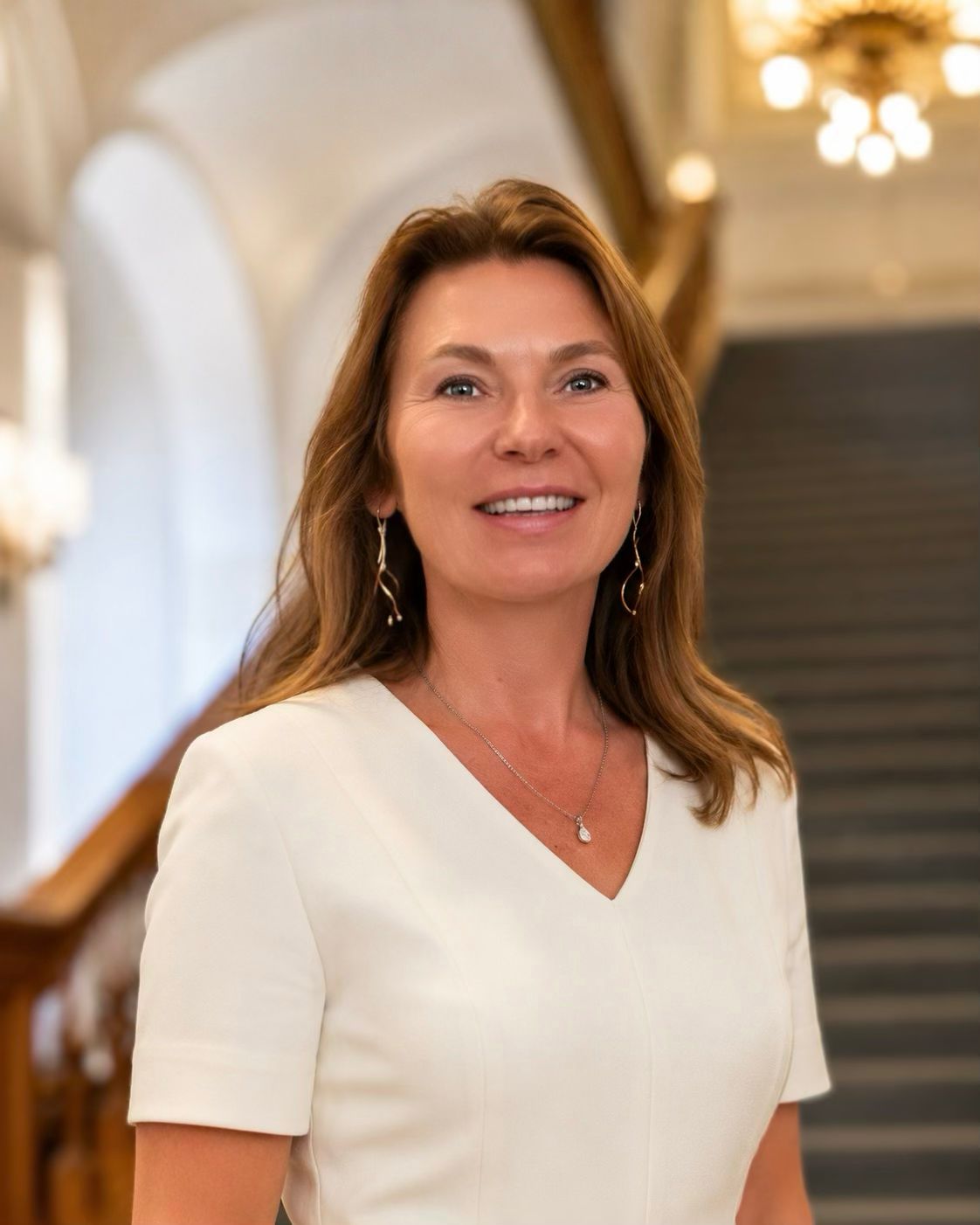
Julia PerssonFounding Architect, Women’s Health 2040 · Founder & CEO, Scita Health
Julia Persson is the Founding Architect of Women’s Health 2040. She is also the Founder and CEO of Scita Health ApS, a Copenhagen-based precision prevention platform focused on women in perimenopause and menopause. Women’s Health 2040 is an open commons initiative, while Scita Health is a commercial entity. The two are intentionally structured as separate organisations, and the Implementation Playbook has been developed within the Women’s Health 2040 framework through a participatory foresight process involving more than 136 contributors across Denmark, Finland, Iceland, Norway, and Sweden. The methodology was peer-reviewed and published in The Lancet Obstetrics, Gynaecology & Women’s Health (January 2026).
Currency conversion note
Appendix
Reference Material
A. International Precedents Consolidated
The Playbook references international precedents inline as worked examples – what an operationally adopted version of a named need looks like in another regional or national context. The table below consolidates the most load-bearing precedents into one reference view. None of these is proposed for direct Nordic adoption; each is cited because the named need it relates to draws on the architectural pattern, the methodology, or the institutional design.
Table 7 – International precedents that inform the Nordic architecture
| Precedent | Jurisdiction | Year | Architectural pattern |
|---|---|---|---|
| UK Renewed Women’s Health Strategy | England (NHS / NIHR) | April 2026 | National women’s-health strategy with PROM commitment; NIHR invested approximately GBP 258 million (EUR 298.7 million) in reproductive health and childbirth research, 2019–2024 |
| Australia MBS Item 695 | Australia (Medicare) | 2024 | Twenty-minute structured menopause assessment with dedicated billing code; 61,000 consultations in first five months |
| ACOG Endometriosis Clinical Guideline | United States | 2024 | Removes mandatory diagnostic laparoscopy as precondition for treatment; endorses clinical diagnosis on symptoms and first-line imaging |
| 2023 International Evidence-Based PCOS Guideline | International | 2023 | Cardiovascular risk screening at PCOS diagnosis; anchored in Journal of the American Heart Association 2024 meta-analysis of 1.06 million women |
| High-STEACS sex-specific troponin trial | UK | Lancet 2018 / JACC 2019 | Sex-specific high-sensitivity cardiac troponin thresholds increase myocardial injury detection in women by 42 per cent |
| STANDING Together consensus framework | International | The Lancet Digital Health, December 2024 | 29 consensus recommendations on transparency and bias evaluation in health AI datasets including sex and gender dimensions |
| EU AI Act Article 57 regulatory sandbox | European Union | August 2026 deadline | Mandatory national regulatory sandbox availability for high-risk AI systems including medical AI |
| EU AI Act Article 10 data governance | European Union | August 2027 (medical-device high-risk) | Bias examination and mitigation in training data for high-risk AI systems |
| European Health Data Space implementing acts | European Union | 26 March 2027 deadline | Data dictionaries, terminology, and access architecture for European health-data secondary use |
| EIC Fund strategic provisions template | European Union | 2021–2024 | 279 portfolio companies, EUR 1.4+ billion signed, EUR 1.6+ billion co-investment mobilised; consent rights over redomiciliation, change of control, IP transfer |
| Bpifrance French Tech Souveraineté | France | 2024 | EUR 650 million envelope for sovereignty-grade technology investments with retention rights |
| KfW Growth Fund | Germany | Continuing | National growth fund instrument paired with private capital |
| WEF Women’s Health Investment Outlook | International | Continuing | Global benchmark: 6 per cent of private healthcare investment goes to women’s health |
| UK FCA AI sandbox investment evidence | UK | 2024 | 6.6× investment-retention multiple for sandbox graduates |
| Australia National Women’s Health Strategy monitoring framework | Australia | Continuing | Reference for women’s-health investment reporting |
| UK CIPD Menopause at Work guidance | UK | Continuing | Workplace menopause support reference; UK Government Employer Action Plan guidance (April 2026) is the operational reference for board-level metrics |
| NHS Confederation et al. Women’s Health Economics: Investing in the 51 per cent | UK | January 2025 | GBP 11 billion (EUR 12.7 billion) annually in absenteeism from severe period pain, heavy periods, endometriosis, fibroids, and ovarian cysts – establishes workplace economic case |
| McKinsey Health Institute Closing the women’s health gap | International | January 2024 | USD 1 trillion (EUR 0.9 trillion) global annual opportunity from closing the women’s-health gap; foundation for the Nordic-scale derivation in C-M-2 |
| IZA Discussion Paper 17793 The Menopause Penalty | UCL / Bergen / Stanford / Delaware | March 2025 | 10 per cent earnings decline four years after menopause-related diagnosis on Norwegian and Swedish register data |
| IHE Report 2024:9 | Sweden / Nordic | October 2024 | EUR 865 million per year in regional Nordic productivity losses from vasomotor menopausal symptoms alone (Astellas-funded) |
B. Glossary of Abbreviations and Terms
The glossary below covers abbreviations, acronyms, and named institutions used across the Playbook. First-use definitions are also given in the chapter prose; this glossary is the consolidated reference. Entries are alphabetised. Where a term has a primary public source, a URL or citation anchor is included.
A
ACOG – American College of Obstetricians and Gynecologists. Issuer of US clinical guidelines; the 2026 endometriosis guideline removes the historical requirement for diagnostic laparoscopy before treatment. acog.org
AmbuFlex – Danish patient-reported outcome platform operating at permanent regional funding in Region Midtjylland; current scope covers oncology, epilepsy, diabetes, chemotherapy. ambuflex.dk
ARC – Applied Research Collaboration. UK NIHR regional knowledge-mobilisation infrastructure; ten ARCs across England with combined GBP 157 million (EUR 181.8 million) funding.
B
BIRCWH – Building Interdisciplinary Research Careers in Women’s Health. NIH Office of Research on Women’s Health programme; 19 active programmes; 38% grant success rate for scholars vs 29% NIH baseline.
BRACE – UK rapid evaluation centre that evaluated the Women’s Health Hubs model in 2024 (17 active hubs assessed; NIHR Bookshelf NBK607329). DHSC reporting to the Women and Equalities Committee identified 88 hubs in development with 80 operational by December 2024; the DHSC women’s health hubs cost-benefit analysis projected a GBP 7.3 billion (EUR 8.5 billion) net benefit.
C
CFIR – Consolidated Framework for Implementation Research. Implementation-science methodology referenced in the Accelerator Loop discussion.
CIHR – Canadian Institutes of Health Research. Canadian federal health-research funder; operates the Sex and Gender-Based Analysis Plus (SGBA+) policy. cihr-irsc.gc.ca
CIPD – Chartered Institute of Personnel and Development (UK). Issuer of the Menopause at Work policy framework, updated April 2026 to include recommended board-level metrics. cipd.org
CIRCE – Forte-funded Swedish research centre at Lund University focused on cancer and women’s health equality. November 2025 grant decision; one of three centres under the SEK 210 million Forte allocation.
CMO – Context-Mechanism-Outcome configurations. Realist evaluation methodology referenced in Accelerator Loop discussion.
CoARA – Coalition for Advancing Research Assessment. 2022 European agreement on responsible research assessment, signed by Karolinska Institutet and others. coara.eu
ComPaRe-Endometriosis – French e-cohort of nearly 7,000 endometriosis participants; 2026 publication confirms 10-year average diagnostic delay for endometriosis and 11 years for adenomyosis. compare.aphp.fr
CSRD – Corporate Sustainability Reporting Directive (EU). Sustainability disclosure regime; the March 2026 Omnibus simplification leaves topical social disclosures (ESRS S1) dependent on company-level materiality assessments.
CVD – Cardiovascular disease. Used in the Playbook to denote sex-differentiated cardiovascular conditions in women, where Nordic guideline coverage is structurally absent.
D
DARWIN-EU – Data Analysis and Real World Interrogation Network. EU regulatory science network; Sweden became its first Swedish data partner in April 2025. darwin-eu.org
deCODE – Icelandic genetics company; works at population scale through medical-records-based phenotyping. The 2024 deCODE-led CCDC201 paper (Nature Genetics) used 174,000 women across Iceland, Denmark, UK, Norway. decode.com
DORA – San Francisco Declaration on Research Assessment. 2013 declaration adopted by Karolinska Institutet (2020) and other Nordic universities. sfdora.org
Driv – Norwegian women’s health research centre at the University of Bergen, funded NOK 50 million by the Trond Mohn Foundation in 2025; broadest disciplinary scope in the Nordic region.
E
EHDS – European Health Data Space. EU regulation that entered into force 26 March 2025; key implementing acts due 26 March 2027; secondary-use provisions applicable from March 2029 for most categories, March 2031 for genomic data, with non-EU access provisions in 2035.
EHDEN – European Health Data and Evidence Network. Federated network using OMOP common data model; Nordic registries mapped through EHDEN at multiple sites. ehden.eu
EIWH – European Institute of Women’s Health. Brussels-based advocacy organisation; February 2026 report “Towards an EU Strategy for Women’s Health” co-signed by 50+ organisations. eurohealth.ie
ERIC – Expert Recommendations for Implementing Change. Implementation-science taxonomy referenced in Accelerator Loop discussion.
EVIPNet – Evidence-Informed Policy Network. WHO knowledge-translation initiative; March 2026 global research agenda identifies 19 priority research areas.
F
FEGA – Federated European Genome-phenome Archive. Cross-border secure-data infrastructure; operational in Norway, Finland, Sweden, and other EU member states; Sweden has been a founding member since September 2022. ega-archive.org/federated
FIMM – Institute for Molecular Medicine Finland. University of Helsinki research institute; defined women’s-health research area using FinnGen-scale data. fimm.fi
FinnGen – Finnish nationwide genetic study; February 2026 release R14 includes 519,329 individuals with endpoint data. finngen.fi
Forte – Swedish Research Council for Health, Working Life and Welfare. Funded three Swedish women’s-health centres (WHOLE, MAMA Research Hub, CIRCE) in November 2025 totalling SEK 210 million. forte.se
FP10 – Tenth EU Framework Programme for Research and Innovation. In formation through 2027; July 2025 Commission proposal sets EUR 175 billion budget.
G
GENDERACTIONplus – EU-funded gender-research-policy coordination project; reports that 86.4% of Horizon Europe projects addressed sex and gender considerations in 2024, up from 33.9% in 2014. genderaction.eu
H
HUNT – Trøndelag Health Study, Norwegian University of Science and Technology. Long-running population cohort; lead institution of the NordForsk Nordic Biobank Network 2026–2030.
I
IHE – Institutet för Hälso- och Sjukvårdsekonomi (Institute of Health Economics, Lund). Authored the October 2024 Nordic VMS study modelling EUR 865 million in annual productivity losses across the five Nordic countries. ihe.se
IZA – Institute of Labor Economics (Bonn). Source of Discussion Paper 17793 (March 2025) on menopause and earnings, documenting a 10 per cent earnings decline four years post-diagnosis on Norwegian and Swedish register data. iza.org
K
KISO – Kronisk Sygdom i Overgangsalderen. Danish menopause cohort established 2024; 153,800 women staged using STRAW+10 criteria; only large-scale Nordic cohort with proper menopause phenotyping.
M
MAMA Research Hub – Forte-funded Swedish maternal-health research hub at Linköping University focused on multidisciplinary strategies for maternal health, person-centred care, evidence-based interventions, and integrated postpartum follow-up. November 2025 grant decision.
MBS Item 695 – Australian Medicare Benefits Schedule item: 20-minute structured menopause assessment with dedicated billing code; generated 61,000 consultations in first five months.
McKinsey Health Institute (MHI) – Author of the 2025 Closing the Women’s Health Gap Blueprint reporting <1% of cumulative 2019–2023 funding for women-specific conditions across 64 conditions.
MENQOL – Menopause-Specific Quality of Life Questionnaire. Validated patient-reported outcome instrument.
MoBa – Norwegian Mother, Father and Child Cohort Study. 94,834 mothers, 75,229 fathers, 113,632 children; up to 25 years of follow-up. fhi.no/en/studies/moba
N
NCM – Nordic Council of Ministers. Pan-Nordic political coordination structure; the Copenhagen Call to Action on Gender Equality and LGBTI was adopted by NCM in February 2026. norden.org
NeIC – Nordic e-Infrastructure Collaboration. Operates the Nordic AI Union pre-study mapping compute capacity for assembled Nordic intelligence layers. neic.no
NFGP – Nordic Federation of General Practice. Coordinates through congresses; next held in Jönköping 26–29 May 2026.
NFOG – Nordic Federation of Societies of Obstetrics and Gynecology. Maintains an open online textbook, biennial congress, and trainee subgroup (NFYOG). nfog.org
NIHR – National Institute for Health and Care Research (UK). Invested approximately GBP 258 million (EUR 298.7 million) in reproductive health and childbirth research, 2019–2024 (Lancet RCOG consensus statement, DOI 10.1016/S3050-5038(25)00151-7); commissioned the network of NHS women’s health hubs operating across regional integrated care boards by December 2024. nihr.ac.uk
NKTEA – National Competence Service for Endometriosis and Adenomyosis (Norway). Opened at Oslo University Hospital September 2024; the only institutionally anchored, nationally mandated specialist women’s-health service in any Nordic country.
NordForsk – Pan-Nordic research-funding agency under NCM; funds the Nordic Biobank Network 2026–2030. The 2015 Nordic Centres of Excellence call “Solving the Gender Paradox” is the most recent NordForsk instrument with explicit gender focus. nordforsk.org
NSHDS – Northern Sweden Health and Disease Study. Approximately 143,000–150,000 participants with repeated sampling and long follow-up at Umeå University.
O
OMOP – Observational Medical Outcomes Partnership. Common data model used widely in Nordic health-data research; 59% of Nordic research groups use at least one common data model per November 2025 NorPEN survey. ohdsi.org
ORWH – Office of Research on Women’s Health (US NIH). Hosts BIRCWH and the Specialized Centers of Research Excellence on Sex Differences. orwh.od.nih.gov
P
PCOS – Polycystic ovary syndrome. The 2023 international evidence-based PCOS guideline recommends cardiovascular risk screening at diagnosis.
PROM – Patient-Reported Outcome Measure. Validated instrument capturing patient-reported quality-of-life outcomes.
PROMiNET – Patient-Reported Outcome network at Oslo University Hospital; supports PROM design across Helse Sør-Øst.
R
RAND-12 / RAND-36 – Health-related quality-of-life instruments. Standard metadata for EQ-5D-5L, RAND-12, and RAND-36 finalised in Norway in February 2026.
RIKSHÖFT – Swedish national hip-fracture registry; continuously operational since 1988; 65–70% female population; paused registrations June 2025.
RSHE – Relationships, Sex and Health Education. UK statutory guidance, revised 2025, implementation from September 2026; first to make menstrual and gynaecological health mandatory at secondary level.
S
SAGER – Sex and Gender Equity in Research guidelines. Published 2016; reaffirmed by European Association of Science Editors in 2025; adopted across the Elsevier and Nature Portfolios.
SGBA+ / SABV – Sex and Gender-Based Analysis Plus (CIHR Canada) / Sex As a Biological Variable (NIH USA). Funder-level analytical frameworks for sex- and gender-stratified research.
Sitra – Finnish Innovation Fund. Leads VALO2, the Nordic Council of Ministers-funded EHDS implementation programme through October 2026. sitra.fi
STANDING Together – Consensus standard for evaluating clinical AI dataset bias; published in The Lancet Digital Health, 18 December 2024; 29 consensus recommendations.
STRAW+10 – Stages of Reproductive Aging Workshop +10 staging criteria for menopause phenotyping; used in the Danish KISO cohort.
T
Tryggve / Heilsa Tryggvedottir – Long-running Nordic sensitive-data infrastructure collaboration; foundation layer for FEGA and the Nordic Biobank Network.
V
VALO2 – Sitra-led, Nordic Council of Ministers-funded programme preparing Nordic infrastructure for EHDS implementation; runs through October 2026; convenes the Nordic Health Data Summit in Oslo September 2026.
Vetenskapsrådet (VR) – Swedish Research Council. Required mandatory sex and gender declaration in all grant applications since 2020. vr.se
W
WHAM – Women in Healthy Transition. University of Copenhagen interdisciplinary research programme on menopause, identity, work, and inequalities.
WHOLE – Forte-funded Swedish women’s-health research centre at Uppsala University, covering reproductive transitions, mental ill-health, and pain across the life course. November 2025 grant decision.
WOMHER – Uppsala research school for women’s mental health; running since 2021; 16 interdisciplinary doctoral projects, 17 doctoral students, ~50 senior researchers.
C. Contributor List
The Charter and Playbook acknowledge 136 named contributors across five Nordic countries who participated in the 2025 foresight process — across the Research, Care, Innovation, Governance, and Literacy and Awareness expert groups, the Charter co-leads, the Charter co-authors who signed onto the January 2026 Lancet publication, the Copenhagen Institute for Futures Studies as foresight partner, the Nordic Women’s Health Hub as ecosystem anchor, and the ambassadors carrying the work into 2026. The full contributors and acknowledgements page is maintained at womenshealth2040.org/contributors, with the broader ambassador and partner directory at womenshealth2040.org/network. Ambassadors and partner organisations who joined since are added as engagement deepens.
D. Citations and References
The body of this Playbook draws on public sources cited inline (institutional names, peer-reviewed publications with journal and date, regulatory documents with article references, and dated press communications). Primary anchors include: the Nordic Charter for Women’s Health 2040 (The Lancet, January 2026); the live Nordic Women’s Health Intelligence Brief at womenshealth2040.org; the EU AI Act (Regulation 2024/1689); the European Health Data Space Regulation (2025); EU Framework Programme 10 formation documents 2026-2027; STANDING Together (The Lancet Digital Health, December 2024); IZA Discussion Paper 17793 (March 2025); IHE Report 2024:9 (October 2024); McKinsey Health Institute Closing the women’s health gap (January 2024). Consolidated references follow below, organised by category.
International precedents and benchmarks
Persson, J. and the Nordic Charter Working Group. Nordic Charter for Women’s Health 2040. The Lancet, January 2026. DOI 10.1016/S3050-5038(26)00014-2.
Royal College of Obstetricians and Gynaecologists. Women’s health research priorities in the UK: a consensus statement. The Lancet Obstetrics, Gynaecology, & Women’s Health, November 2025. DOI 10.1016/S3050-5038(25)00151-7. Cites NIHR investment of approximately GBP 258 million in reproductive health and childbirth research, 2019–2024.
Department of Health and Social Care (UK). Renewed Women’s Health Strategy for England, 15 April 2026. gov.uk/government/news/womens-voices-to-be-at-the-heart-of-renewed-health-strategy.
NHS Confederation, CREATE Health Foundation, London Economics. Women’s Health Economics: Investing in the 51 per cent, May 2025. nhsconfed.org. GBP 11 billion annual workplace cost of severe period pain, heavy periods, endometriosis, fibroids, and ovarian cysts.
BRACE final evaluation. Women’s Health Hubs in England (17 active hubs assessed). NIHR, 2024. NIHR Bookshelf NBK607329.
Australian Government Department of Health. MBS Item 695 (menopause and perimenopause health assessment), introduced 1 July 2025; utilisation media release 3 January 2026 (61,000 women in first five months). health.gov.au.
Department of Health (Ireland). Women’s Health Action Plan 2024–2025 Phase 2: An Evolution in Women’s Health, 18 April 2024 (EUR 11 million; six fertility hubs, five endometriosis hubs, two specialist centres). gov.ie.
European Institute of Women’s Health (EIWH). Towards an EU Strategy for Women’s Health, launched 3 February 2026 at the European Parliament; coordinated by EIWH with 50+ expert organisations. eurohealth.ie/eu_strategy_for_womens_health.
World Economic Forum. Women’s Health Investment Outlook: 6% of Funding for Nearly 50% of the Population, 20 January 2026. weforum.org/publications/women-s-health-investment-outlook-2026.
Canadian Institutes of Health Research. 2024–25 Departmental Results Report (SGBA+ inclusion rate 85.8 per cent for 2024–25). cihr-irsc.gc.ca/e/54360.html.
American College of Obstetricians and Gynecologists. 2026 Guidelines for Women’s Preventive Services. acog.org.
Nordic guidelines and clinical infrastructure
Socialstyrelsen (Sweden). Nationella riktlinjer 2026 – Klimakteriebesvär – Riktlinjerna i korthet (Artikelnummer 2026-4-10203), 16 April 2026; comment version Artikelnummer 2025-9-9821, 14 October 2025. socialstyrelsen.se.
Suomalainen Lääkäriseura Duodecim. Vaihdevuodet (Käypä hoito -suositus), 22 September 2025. kaypahoito.fi/nix03133.
Suomalainen Lääkäriseura Duodecim. Virtsankarkailu (naiset) (Käypä hoito -suositus), 31 March 2026. kaypahoito.fi/hoi50050.
Region Stockholm/Janusinfo. Riktlinjer för utredning och behandling av hirsutism och polycystiskt ovariesyndrom (PCOS), expert-group statement, 19 November 2025. janusinfo.se.
Sundhedsstyrelsen (Denmark). Updated national hysterectomy guideline, 28 November 2025. sst.dk.
Oslo University Hospital. Nasjonal kompetansetjeneste for endometriose og adenomyose (NKTEA); established 26 August 2024, public launch symposium 23 September 2024. oslo-universitetssykehus.no.
Forte (Sweden). Centrumbidrag 2025 – granted applications. Three Swedish women’s-health centres: WHOLE (Uppsala universitet, SEK 72,088,000), MAMA Forskningshub (Linköpings universitet, SEK 67,328,000), CIRCE (Lunds universitet, SEK 70,584,000). forte.se/sok-finansiering/utlysningar/centrumbidrag-2025/beviljade-ansokningar.
AmbuFlex platform (Region Midtjylland, Denmark). Permanent operational PROM platform across 58 of 61 Danish quality registers. ambuflex.dk.
Research, data, and clinical evidence
Breton, Z., Gouesbet, S., Indersie, E., et al. Endometriosis Diagnostic Delay and Its Correlates: Results from the ComPaRe-Endometriosis Cohort. Journal of Women’s Health 35(2):172–188, January 2026. DOI 10.1177/15409996-251380129. N = 6,949; 10 years for endometriosis, 11 years for adenomyosis.
OMOP perinatal expansion. Norway 746,671 pregnancies; SIDIAP 646,530 pregnancies. Pharmacoepidemiology and Drug Safety, 2025. DOI 10.1002/pds.70106.
PCOS and cardiovascular outcomes meta-analysis (1.06 million women). Journal of the American Heart Association 13(17), August 2024. DOI 10.1161/JAHA.123.033572.
Aarhus University. Kvinders sundhed og trivsel – 300,000 women aged 35–60, recruitment opened April 2026 via Statistics Denmark/e-Boks.
FinnGen R14 release. 519,329 individuals with endpoint data, February 2026. finngen.fi.
KISO (Karolinska Institutet Stockholm Cohort), 153,800 women staged using STRAW+10 menopause criteria. ki.se.
Nordic Pharmacoepidemiological Network (NorPEN). Common data model survey across the five Nordic countries, November 2025. Ompad et al., Pharmacoepidemiology and Drug Safety, PMID 41134134.
Be Healthy She (BHS) cohort and 2018 High-STEACS sex-specific troponin trial; 2019 secondary analysis. Heart and JACC.
2023 International Evidence-Based PCOS Guideline (Monash). monash.edu.
Innovation, venture capital, and ecosystem
byFounders. Shape of the New Nordics 2025, February 2026 (Nordic and Baltic VC share to teams with at least one female founder fell to 8 per cent in 2025 from 21 per cent in 2024). byfounders.vc/insights/shape-of-the-new-nordics-2025.
Industriens Fond (Denmark). Nordic Women’s Health Hub Denmark seed funding, press release 22 January 2026 (DKK 1 million; February 2025 launch coverage in Nordic Life Science). industriensfond.dk.
Business Turku / Women’s Health Hub Finland. Parliamentary funding allocation EUR 70,000 for 2026; launched May 2025 in Turku.
European Innovation Council Fund. 279 portfolio companies; investment agreements >EUR 1.4 billion; co-investment mobilised >EUR 1.6 billion (2021–2024). eic.ec.europa.eu/eic-fund_en.
Innovestor Life Science (Sweden). Series B into Gesynta Pharma, SEK 304 million (EUR 28.1 million), January 2025; first patient dosed in Phase II NOVA, March 2026. innovestor.fi.
Voima Ventures. Seed round into Hormona, USD 6.7 million (EUR 5.7 million), May 2025. voimaventures.com.
Verdane. Investment into Berlin-based Clue, January 2026. verdane.com.
Even Founders. State of Nordic Women-Founded Startups 2025 report, April 2026 (219 Nordic women-founded companies raised EUR 707 million in 2025). evenfounders.com.
Oura. October 2025 Series E valuation approximately USD 11 billion; Fidelity-led USD 900 million round. ouraring.com.
EQT Foundation. Women’s health portfolio, 2025. eqtfoundation.com.
BioInnovation Institute (Denmark). Venture Lab and Bio Studio. bii.dk.
Vinnova MeWe&You programme. vinnova.se.
AI, regulation, and digital infrastructure
EU AI Act (Regulation 2024/1689). High-risk obligations apply from 2 August 2027; Article 57 sandbox availability requirement 2 August 2026.
European Health Data Space Regulation (2025). Implementing acts deadline approximately March 2027.
EU Framework Programme 10. Formation through 2026–2027 (Irish Presidency H2 2026; Lithuanian Presidency H1 2027).
STANDING Together consensus framework. The Lancet Digital Health, December 2024. 29 recommendations on transparency and bias evaluation in health AI datasets, including sex and gender dimensions.
Deloitte Insights. Health care leans into agentic AI (US health-care technology executive survey, September 2025; 85 per cent expect to increase agentic AI investment 2026–2028). deloitte.com/us/en/insights/industry/health-care/agentic-ai-health-care-operating-model-change.html.
Kaiser Permanente. Press release on AI ambient documentation deployment (Abridge, 40 hospitals and 600+ medical offices), 14 August 2024. kaiserpermanente.org.
Datatilsynet (Norway). AI sandbox programme, operational since 2021. datatilsynet.no.
Datatilsynet and Digitaliseringsstyrelsen (Denmark). Joint AI sandbox, 2024. datatilsynet.dk.
Danish Centre for AI Innovation (DCAI). Gefion supercomputer access for DTU and Amager-Hvidovre Hospital from 4 September 2025. dcai.dk.
OpenEuroLLM consortium. March 2025 to January 2028. openeurollm.eu.
NeIC (Nordic e-Infrastructure Collaboration). FEGA Sweden founding member September 2022. neic.no.
Nature Medicine. Karolinska Institutet ovarian cancer ultrasound paper, January 2025.
BMJ. Cervical screening AI paper, October 2025.
Economic and population data
Institute for Health Economics (IHE Sweden). Report 2024:9, October 2024.
Institute of Labor Economics (IZA). Discussion Paper 17793, March 2025 (10 per cent post-diagnosis earnings decline on Nordic register data).
McKinsey Health Institute. Closing the women’s health gap, January 2024.
OECD. Female labour-force participation statistics, 2024 (Nordic countries 70–80 per cent depending on country and methodology). oecd.org.
World Bank. Labor force participation rate, female (% of female population ages 15+), 2023–2024. worldbank.org.